If you’re trying to figure out how full you can fill a roll-off dumpster before a Dallas hauler turns it away, the short answer is: right up to a line a few inches below the top rim — not the top rim itself. Beyond that, the answer depends on whether you’re loading light bulky items or dense, heavy debris, since the two run into very different limits long before the container “looks” full. This guide walks through where the fill line actually sits, the difference between a volume overfill and a weight overfill, what happens if a load doesn’t pass at pickup, and how to load a container so you don’t run into either problem.
Where Is the Fill Line on a Roll-Off Dumpster?
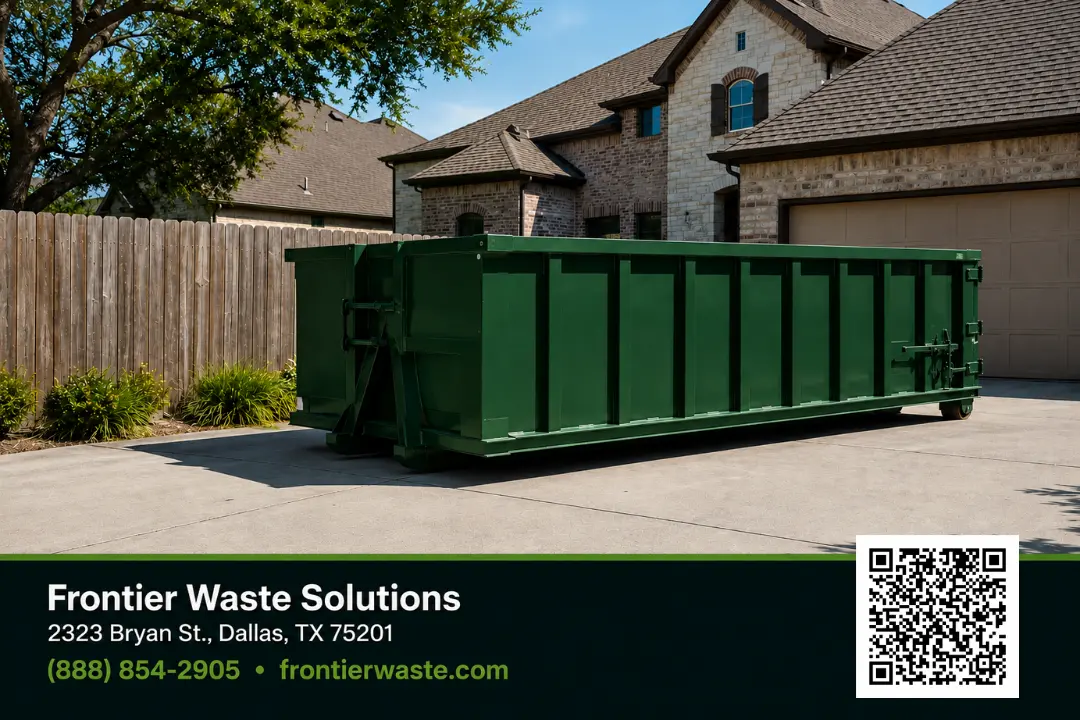
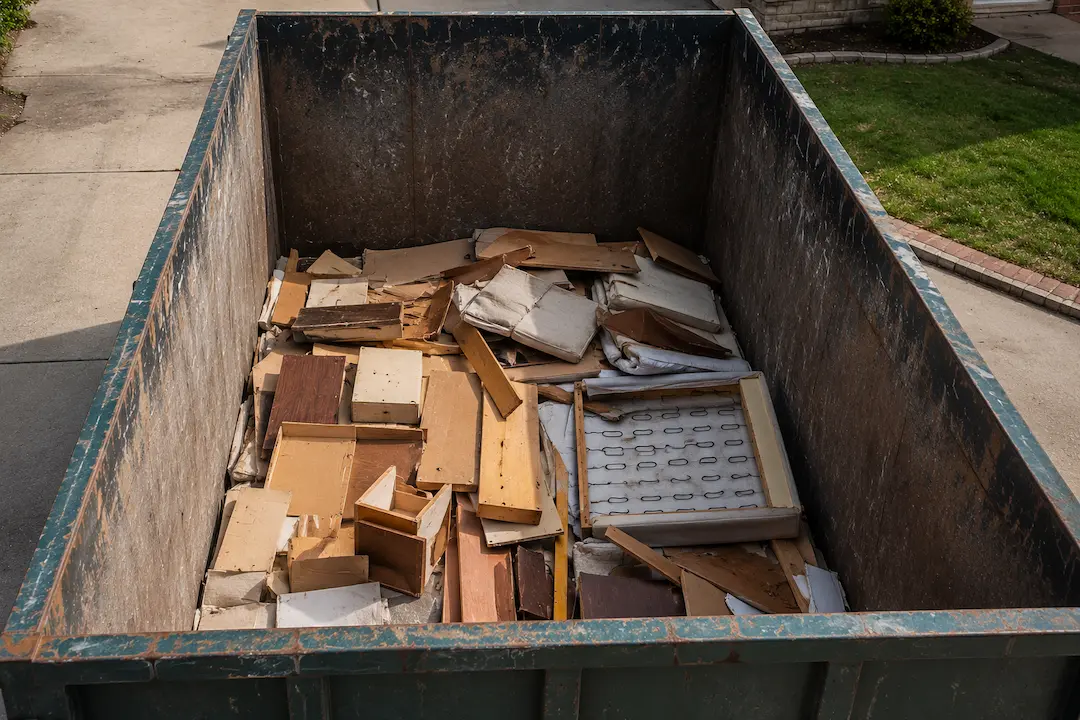
Every roll-off dumpster has an understood fill line a few inches below the top edge of its sidewalls, even though it’s rarely painted or marked on the container itself. The line exists for one practical reason: a loaded roll-off has to be covered with a tarp before it’s driven anywhere, and a tarp can’t lie flat over debris that’s mounded above the walls. Frontier’s own container specs illustrate why the line matters differently by size — a 20-yard container’s sidewalls run about 4 feet tall, a 30-yard about 6 feet, and a 40-yard about 7.5 feet, so “full” looks different depending on which size you’ve booked. Loading to the fill line rather than to the physical top of the walls gives the crew room to tarp the load flat and keeps debris from shifting or spilling once the container is on the truck.
Can You Overfill a Roll-Off Dumpster?
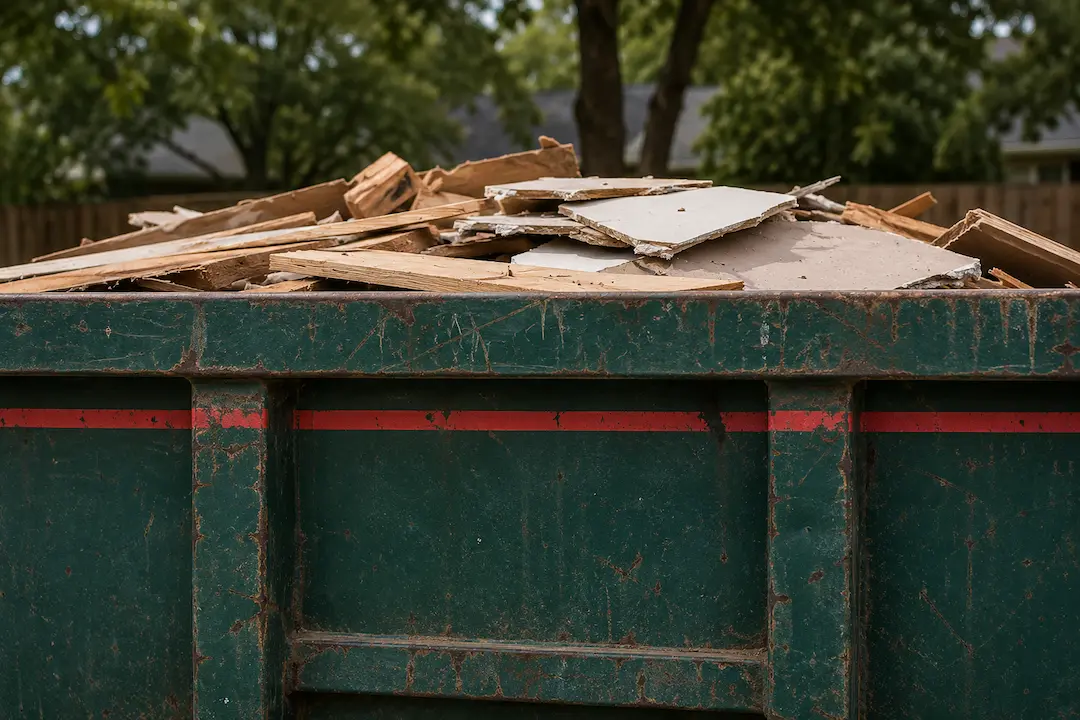
Physically, yes. It’s easy to keep tossing debris in until it’s piled well above the sidewalls, especially toward the end of a big cleanout when everyone just wants the job done. But “can” and “should” split apart right here. A load that sits above the rim isn’t safe to cover, isn’t safe to transport, and in most cases simply won’t be picked up in that condition. Instead of getting your dumpster hauled away on schedule, an overfilled container usually means a delay while the load gets leveled off or partially removed — the opposite of what you were trying to avoid by renting a bigger container in the first place.
What Counts as an Overfilled Dumpster? (Volume vs. Weight)
There are actually two separate ways a roll-off can be “overfilled,” and they don’t always happen together. The first is a volume overfill — debris piled above the container’s sidewalls, regardless of how much it weighs. A dumpster full of light, bulky items like furniture or cardboard can hit this limit while still being well under its weight allowance. The second is a weight overfill — the load exceeds the container’s tonnage allowance even though it sits comfortably below the rim. Dense material like dirt, tile, or concrete can trigger this one with the container still looking half-empty. Knowing which limit you’re likely to hit first changes how you should load the container, which is exactly why heavy debris gets treated differently below.
Does Heavy Debris Change How Full You Can Go?
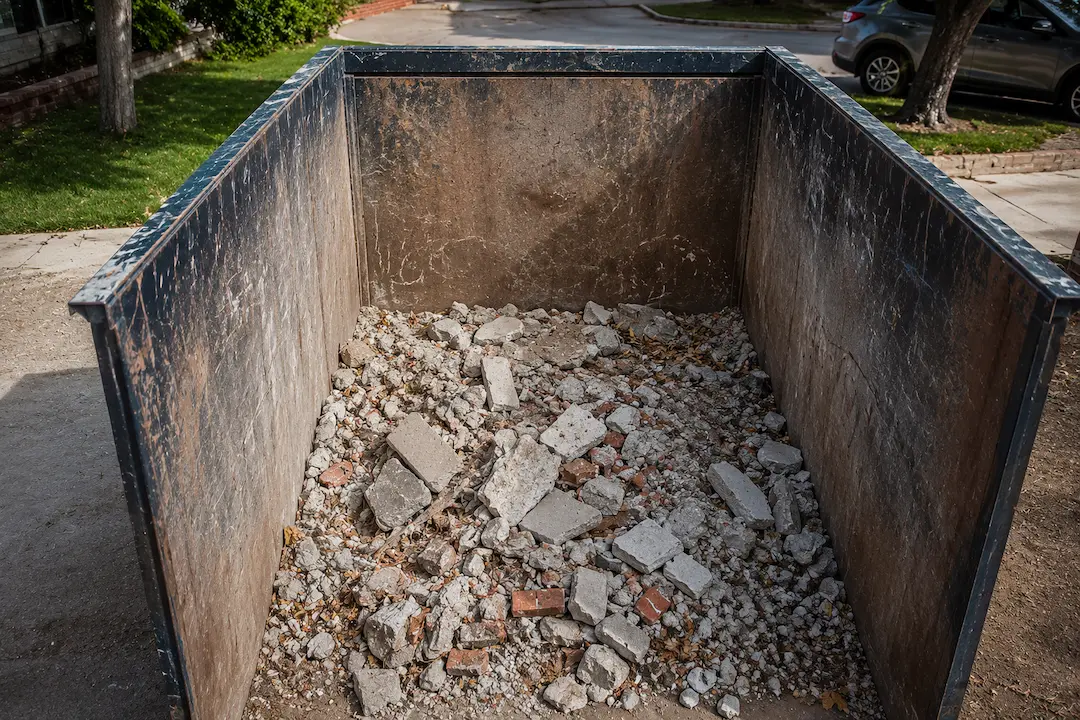
Yes, significantly. Weight, not volume, becomes the limiting factor the moment you’re loading dense material — dirt, brick, tile, roofing shingles, or concrete. A roll-off that could hold a full load of household junk to the fill line might hit its weight allowance at only a third or half that height when it’s loaded with debris like this instead. This isn’t unique to any one hauler: municipal roll-off programs across North Texas commonly instruct residents that dirt, rock, brick, or dry concrete should go in no more than half full, specifically because that material is so dense that a fuller load would push well past a safe, legal haul weight. The same logic applies to any private roll-off rental — if your project is generating heavy debris rather than bulky-but-light waste, plan on stopping well short of the rim and ask your hauler for guidance on how full to load before you start.
What Happens if a Dumpster Is Overfilled at Pickup in Dallas?
When a driver arrives to a container that’s overfilled — either piled above the rim or too heavy to lift and haul safely — the load typically can’t be picked up as-is. Depending on the hauler and the specific situation, that can mean the crew levels off the excess on-site, the customer is asked to remove some material before the truck returns, or the pickup gets rescheduled entirely. Any of those outcomes tends to cost time, and often adds a fee on top of it. The exact process and any overage or return-trip charges vary by provider and by how the load came in, so it’s worth confirming what to expect with your hauler before delivery day, rather than finding out at pickup.
Why Do Haulers Care So Much About the Fill Line? (Tarping & Road Safety)
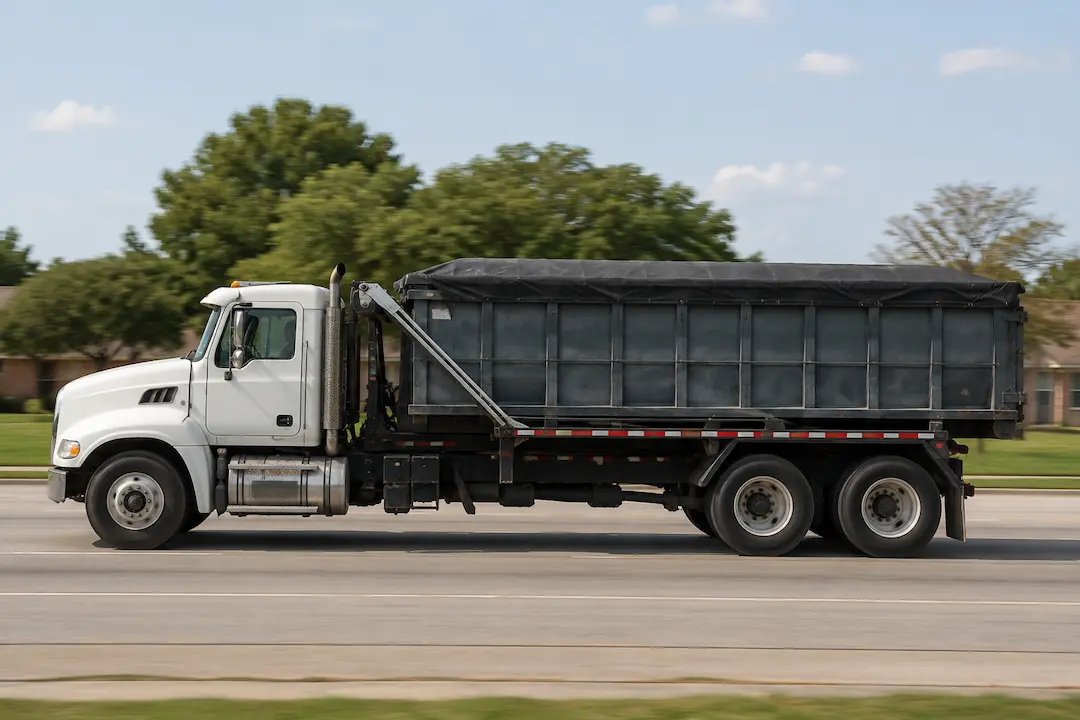
The fill line isn’t an arbitrary rule — it’s tied directly to what’s legally required once a loaded container leaves your property. A roll-off has to be tarped before it travels on public roads, and debris mounded above the sidewalls can’t be covered flat, which creates a real risk of material falling out onto the road during transit. On top of that, the truck hauling the container has to stay within standard axle-weight and gross-vehicle-weight limits that apply to every heavy truck on Texas roads — the same rules that make weight limits matter regardless of how a load looks from the outside. Staying at or below the fill line, and within the container’s weight allowance, is what keeps the load safe to cover, safe to haul, and legal to drive.
How Do You Load a Roll-Off So It Doesn’t Overfill?
A few habits go a long way toward keeping a load within both the fill line and the weight allowance:
- Load heavy items first, along the bottom. This keeps weight low and centered rather than piled on top, where it’s more likely to shift or tip the load.
- Break down bulky items. Flattened boxes, disassembled furniture, and broken-up debris take up far less volume than the same material left whole.
- Distribute weight evenly, side to side and end to end. An unevenly loaded container can be difficult or unsafe for the crew to lift.
- Mix light and heavy materials when you can. Loading all the concrete or dirt first, then filling remaining space with lighter debris, helps you use the container’s volume without blowing past the weight limit.
- Keep everything below the rim. If you’re not sure whether you’re approaching the fill line or the weight limit first, stop and ask — it’s easier to arrange an extra pickup than to deal with a load that gets turned away.
Quick FAQ
- Can I fill a dumpster with light debris all the way to the top?
- Generally yes, as long as it stays at or below the fill line so the load can still be tarped flat — light, bulky material is far more likely to hit the volume limit before the weight limit.
- Does the fill line apply the same way to concrete and dirt loads?
- The line itself is the same, but you’ll almost never reach it with dense material — the weight allowance will typically stop you well before the container looks full.
- What if my load is only a little over the fill line?
- Even a small amount above the rim can be enough to prevent a flat tarp seal, so it’s worth leveling the load before pickup rather than assuming a small excess will be fine.
- Can I request a second, smaller pickup instead of overfilling one container?
- In most cases, yes — an extra haul is generally simpler and cheaper than dealing with a load that gets turned away at pickup for being overfilled.
Not Sure How Full to Load Your Dallas Roll-Off?
Frontier Waste Solutions can walk you through the fill line and weight allowance for your exact container before you start loading — so pickup day goes smoothly the first time.
Request a Quote | (888) 854-2905
2323 Bryan St, Suite 2620, Dallas, TX 75201
(888) 854-2905