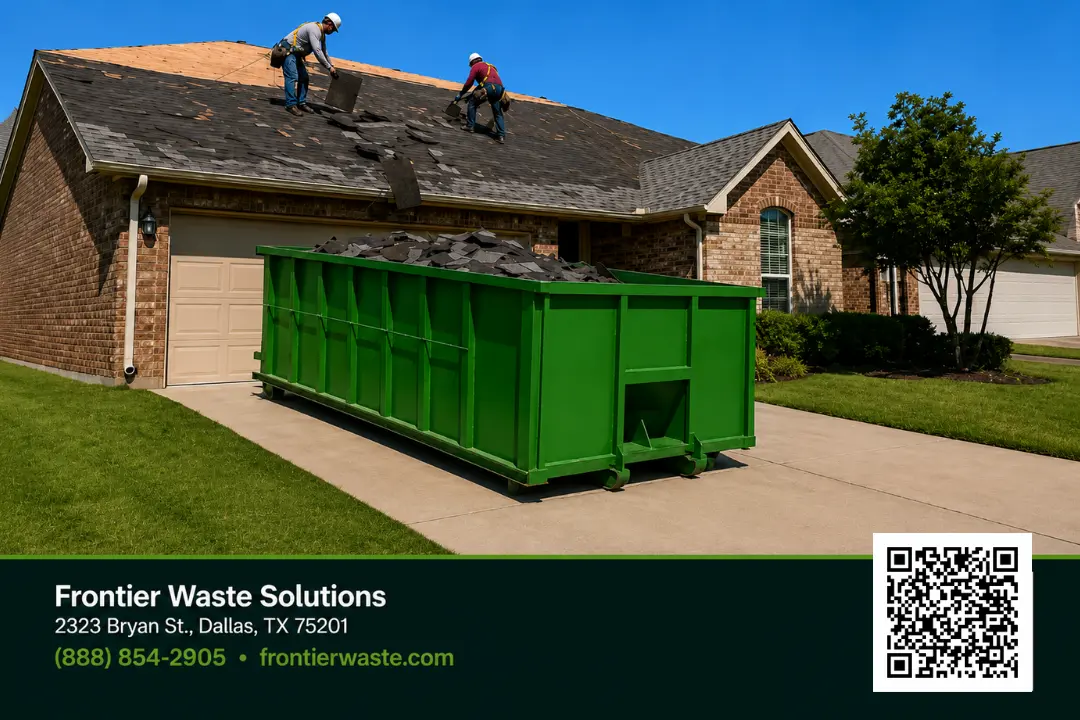
The right roof tear-off dumpster size is one of the first things to lock down when you are planning a re-roof in Dallas. Guess too small and you are paying for a second haul; guess too big and you are paying for empty air. For most single-layer asphalt tear-offs on a Dallas home, a 20-yard roll-off is the right container — it is the size Frontier rents to roofers at a discount, and because shingles are so heavy, the weight limit almost always fills up before the box does. Bigger, steeper, or more complex roofs step up to a 30-yard, and only very large or commercial jobs need a 40-yard. This guide covers which size roofers actually use here, how many roofing squares fit each container, why weight beats volume on a tear-off, what a two-layer roof does to your sizing, what can and cannot go in the box, and what a rental costs in the Dallas–Fort Worth market.
What Size Dumpster Do Roofers Use in Dallas?
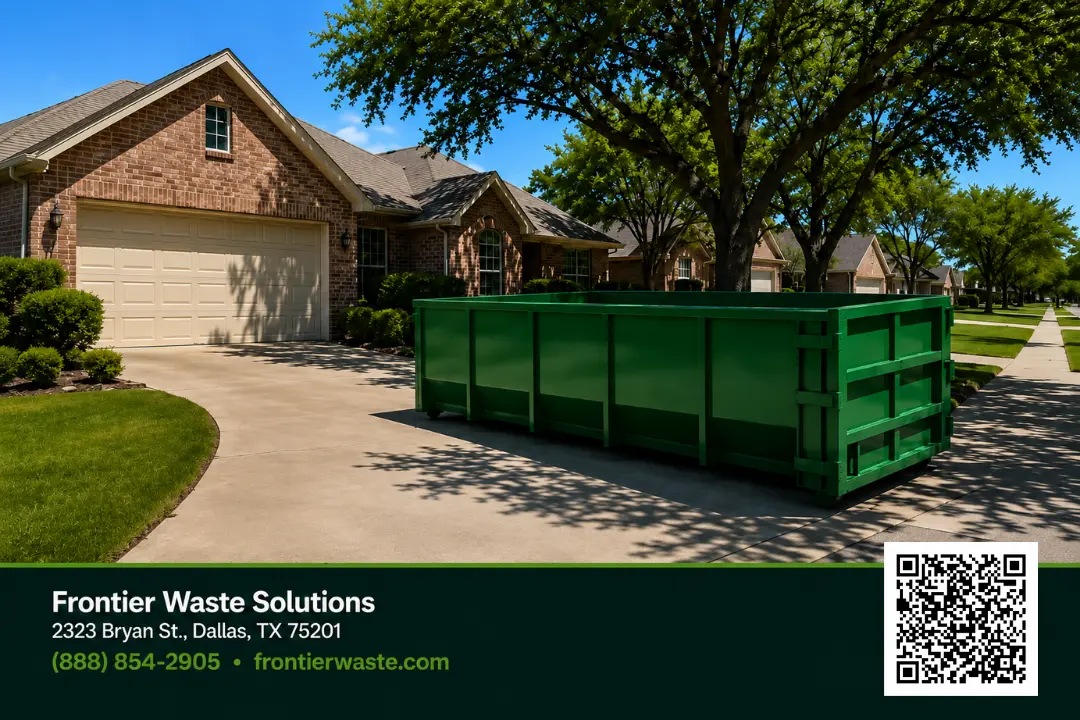
The 20-yard roll-off is the workhorse for Dallas roofing crews. Frontier’s Dallas fleet runs three standard roll-off sizes — 20, 30, and 40 yards — and the 20-yard is offered to roofing companies at a discount, which makes it the default choice for a standard residential tear-off.
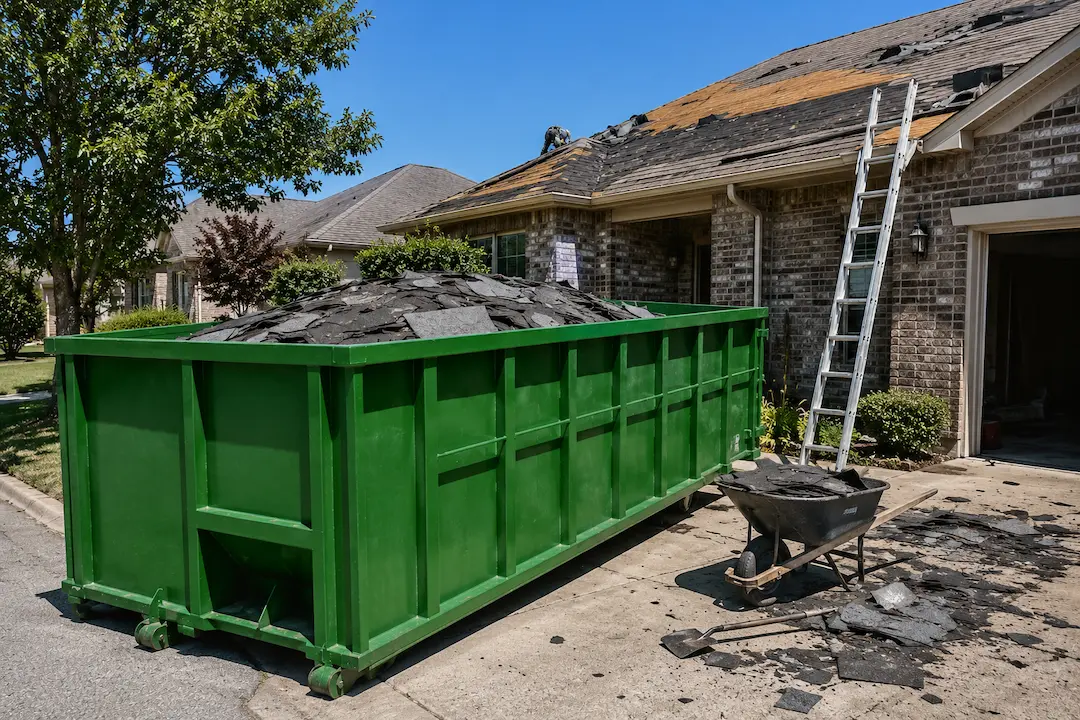
You will sometimes see 10- or 12-yard “roofing boxes” advertised in other markets. Frontier’s Dallas temporary containers start at 20 yards, and that is not a problem for a roof job. Shingles are dense enough that a 20-yard container rarely fills to the rim on a single-family home — you reach the container’s weight allowance long before you run out of space. That is why a “full” roofing dumpster often looks half empty.
Step up to a 30-yard when the roof is large, steep, heavily cut up with valleys and dormers, or when you are replacing decking and sheathing along with the shingles. The 40-yard is reserved for very large homes, multiple structures, or commercial roofs where the added debris justifies the biggest container Frontier runs. In short, the right roof tear-off dumpster size comes down to how heavy your load will be, not how much space it takes up.
How Many Roofing Squares Fit in Each Roof Tear-Off Dumpster Size?
Roofers measure area in squares — one square equals 100 square feet of roof surface. Knowing your roof’s square count is the fastest way to ballpark a container. Here is how Frontier’s three Dallas roll-off sizes line up with a single-layer asphalt tear-off.
| Roll-off size | Dimensions (approx.) | Roofing squares, single layer* | Best fit in Dallas |
|---|---|---|---|
| 20-yard | 20’L × 8’W × 4’H | ~20–30 squares | Most single-family homes. Frontier’s discounted roofing size. |
| 30-yard | 20’L × 8’W × 6’2″H | ~30–45 squares | Large, steep, or cut-up roofs; light decking replacement. Frontier’s most-requested Dallas roll-off. |
| 40-yard | 20’L × 8’W × 7’5″H | ~40–60 squares | Very large, multi-structure, or commercial roofs. |
Treat these ranges as a starting point, not a hard rule. A roof loaded with heavy architectural shingles, wet debris, or old decking will hit the weight cap sooner, which pushes you toward the lower end of each range. When in doubt, tell Frontier your square count and shingle type and let a specialist size it — the free site survey exists for exactly this.
Why Does Shingle Weight Matter More Than Volume?
Roofing is the one job where a dumpster’s cubic-yard number can mislead you. Asphalt shingles are heavy: a single layer runs roughly 250 pounds per square for standard three-tab shingles, and noticeably more for architectural or laminate shingles. Do the math on a mid-size roof and the reason becomes obvious.
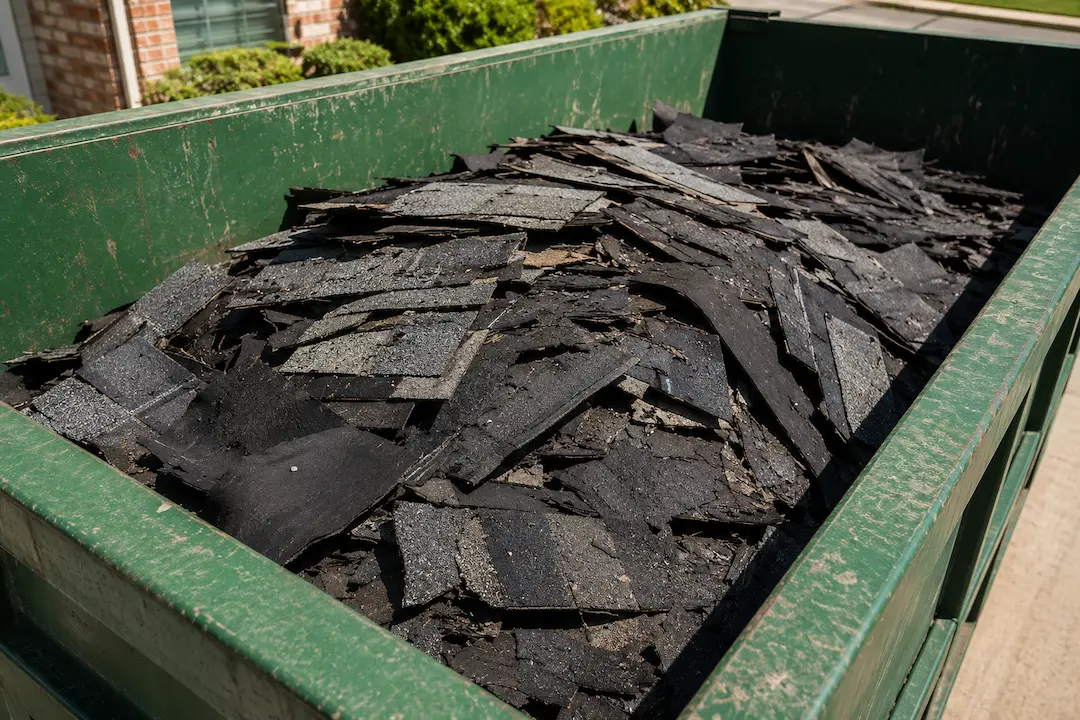
Thirty squares of single-layer shingles weigh about 7,500 pounds — roughly 3.75 tons — before you add felt, nails, flashing, or any decking. Frontier lists the 20-yard’s general weight allowance at about 3 to 5 tons (6,000 to 10,000 pounds). So a 30-square roof can bump right up against a 20-yard’s limit even though the container still has open space at the top. The box looks like it could hold more, but the weight ticket says stop.
This matters for two reasons. First, an overloaded roll-off can be unsafe and may be refused for pickup until it is brought under limit. Second, going over your included weight allowance triggers overage charges that can quietly inflate the bill. Because roofing weight allowances vary by rate and material, confirm the exact tonnage included with your roofing dumpster when you request a quote — that number, more than the yardage, controls what you can actually throw away.
Do You Need a Bigger Dumpster for a Two-Layer Tear-Off?
Often, yes — but for weight reasons, not volume. A two-layer tear-off roughly doubles the pounds per square, to somewhere around 500 pounds for the same 100 square feet of roof. A roof that comfortably fit a 20-yard by weight as a single layer can blow past that container’s allowance once you are pulling off two layers of shingles.
In practice that means one of two things: bump your roof tear-off dumpster size up to a 30-yard so you have the weight headroom, or accept that Frontier may cap the fill line low on a 20-yard to keep the load legal. Either way, the layer count changes the plan.
Plenty of older Dallas homes carry two — and occasionally three — layers of shingles from past re-roofs that went over the top instead of tearing off. If you are not sure how many layers you have, a roofer can check at the eave or a vent penetration. Mention the layer count when you request your quote so the container is sized and priced correctly the first time.
What Can Go in a Roofing Dumpster, and What Stays Out?
A roofing roll-off is built for the debris a tear-off actually generates. The following are all fair game:
- Asphalt three-tab and architectural shingles
- Roofing felt, underlayment, and tar paper
- Nails, staples, and fasteners
- Flashing, drip edge, and metal trim
- Vents, boots, and pipe collars
- Wood decking, sheathing, and plywood pulled during the job
Some materials stay out, both for safety and because Texas landfills will not accept them under state environmental rules (TCEQ). Keep these off the roofing load:
- Asbestos-containing roofing material — a real concern on older Dallas roofs; it must be handled by a licensed abatement contractor, never tossed in a standard roll-off
- Paint, solvents, roofing tar in liquid form, and other chemicals
- Batteries, tires, and pressurized tanks
- Wet or free-liquid materials
- General household hazardous waste
If you are unsure about an item, ask when the container is dropped off. Sorting it out at delivery is easier than getting a load flagged at the transfer station.
How Much Does a Roofing Dumpster Rental Cost in Dallas?
Frontier’s Dallas–Fort Worth roll-off rentals start at $185 per haul and can run up to around $800, depending on the container size, the material you are loading, how long you keep it, and how far the truck travels to your site. Pricing is flat-rate and upfront, with the weight allowance built into the number rather than tacked on later as a surprise.
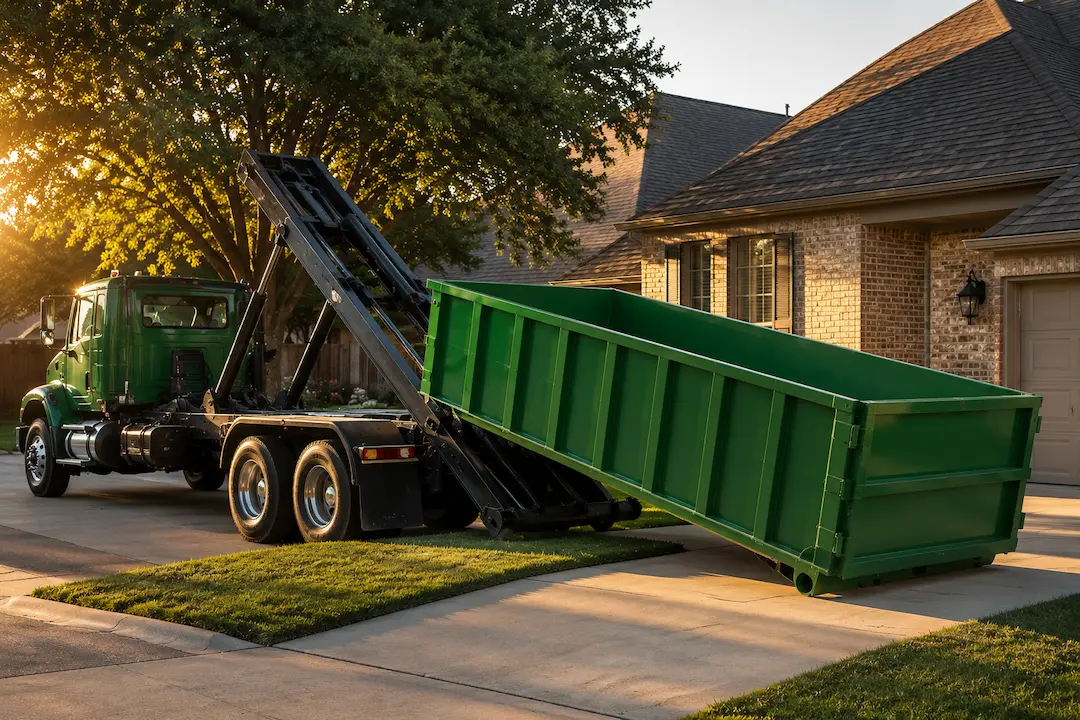
For roofing specifically, your roof tear-off dumpster size and its weight allowance drive the quote more than anything else, along with the overage terms. Shingles are heavy, so a rate with a generous tonnage allowance can be a better deal than a cheaper headline price with a low cap. Because Frontier offers roofers the 20-yard at a discount, say up front that it is a roofing tear-off when you call — it can change which rate you are quoted.
One placement note: if the container sits on your own driveway, no permit is involved. If you need it in the street or public right-of-way, check with the City of Dallas about permit requirements before delivery day. The fastest way to get an exact number is to request a quote with your roof’s square count, shingle type, and layer count in hand — a specialist can match the size and rate to your job and often deliver on a next-day basis.
Quick FAQ
- What size dumpster do I need for a roof tear-off in Dallas?
- For most single-layer asphalt tear-offs on a Dallas home, a 20-yard roll-off is the right size — it is the container Frontier offers roofers at a discount, and shingle weight usually caps the load before the box fills. Large, steep, or two-layer roofs typically move up to a 30-yard.
- Will a 20-yard dumpster be big enough for my roof?
- A 20-yard holds roughly 20 to 30 squares of single-layer shingles, which covers most single-family Dallas roofs. Because shingles are heavy, you usually reach the weight allowance before you run out of room, so the container rarely needs to fill to the top.
- How much does a roofing tear-off dumpster cost in Dallas?
- Frontier’s DFW roll-off rentals start at $185 per haul and range up to about $800 based on size, material, rental length, and distance. Pricing is flat-rate with the weight allowance included. Mention that it is a roofing job to access the 20-yard roofing discount.
- Can I put old roof decking and plywood in the dumpster too?
- Yes. Wood decking, sheathing, and plywood pulled during a tear-off go in the same roll-off as your shingles, felt, nails, and flashing. Just factor the added weight into your size, because decking can push a borderline 20-yard job up to a 30-yard.
- Do I need a permit to put a roofing dumpster in my driveway in Dallas?
- No permit is needed for a container placed on your own driveway or private property. If you need to place it in the street or public right-of-way, check with the City of Dallas about permit requirements before your delivery date.
Size Your Dallas Roof Tear-Off the Right Way
Tell Frontier Waste Solutions your roof’s square count, shingle type, and number of layers, and a Dallas specialist will match the right roll-off to your job — often with next-day delivery.
Request a Quote | (888) 854-2905
2323 Bryan St, Suite 2620, Dallas, TX 75201
(888) 854-2905