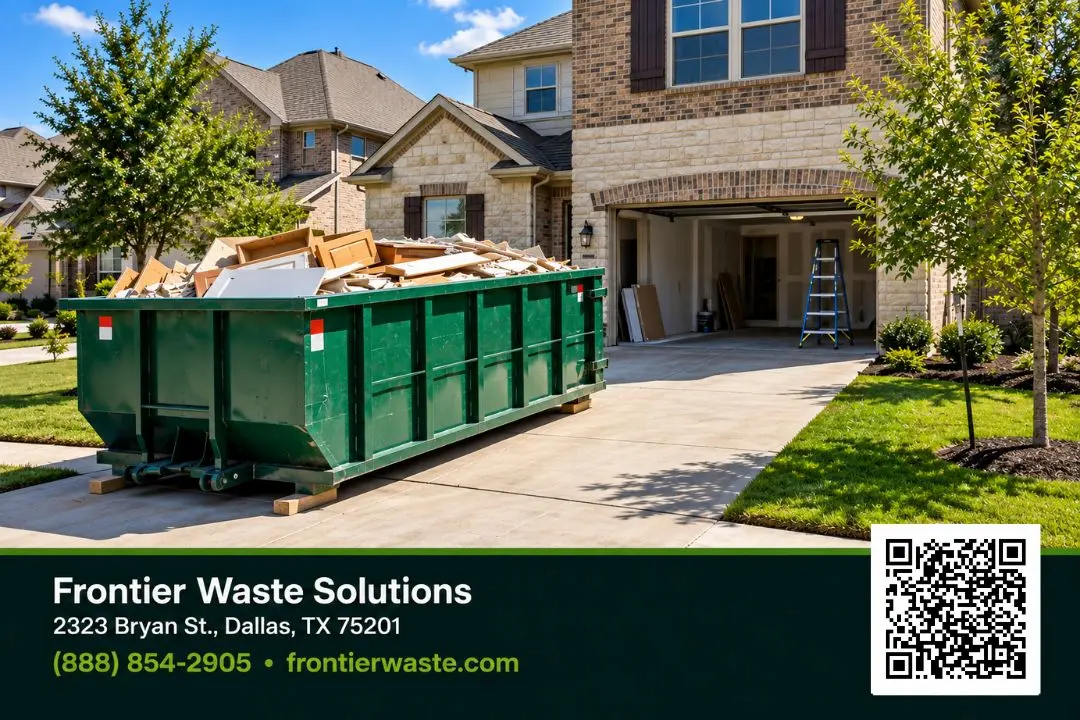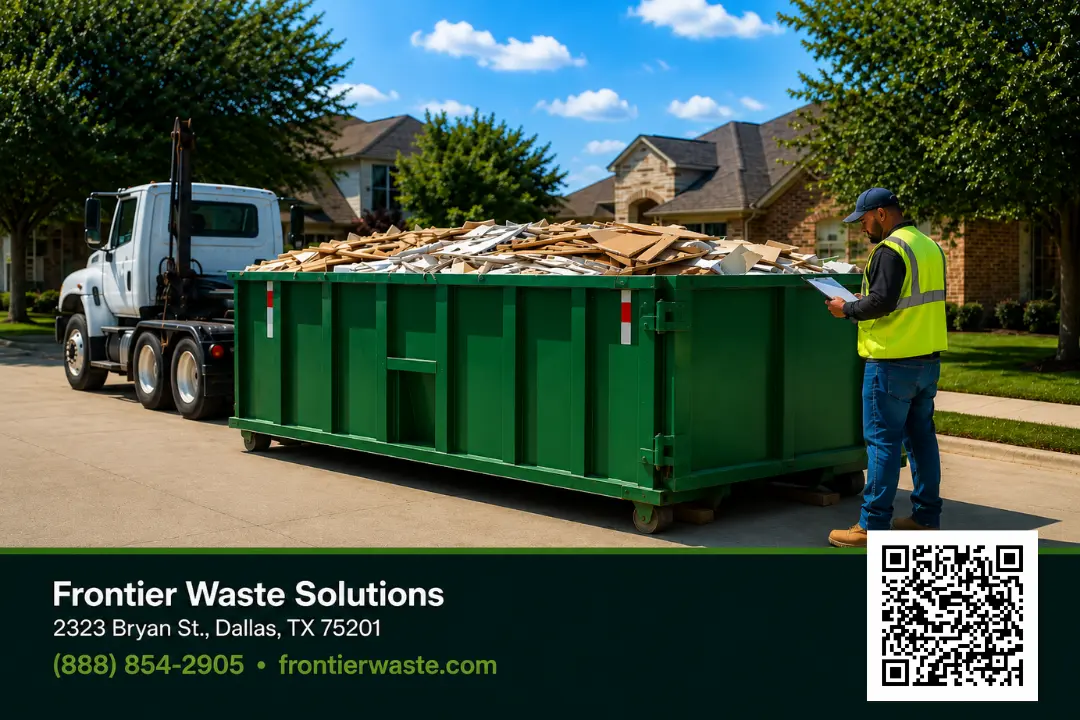
A dumpster full before the job’s done is one of the most common mid-project surprises on a Dallas renovation or construction site. Demo debris is heavier and bulkier than it looks stacked against a wall, and by the third day of a job the container that seemed generous on delivery day is level with the rim while the crew still has half the work left. It happens on almost every project sooner or later, and a full bin doesn’t mean the job stops before it’s finished.
What happens next depends on a few things: how much room is left at your site, whether the material still coming out is heavy or just bulky, and how much of the project remains. In most cases the fix for a dumpster full before the job’s done is a quick call to Frontier’s rental team and a truck back on your street within a day, not a rescheduled job.
This guide walks through what actually happens once a dumpster is full mid-project, what a swap-out service is, when a second container makes more sense than a swap, and how to think about cost and container size so it does not happen again on the next job.
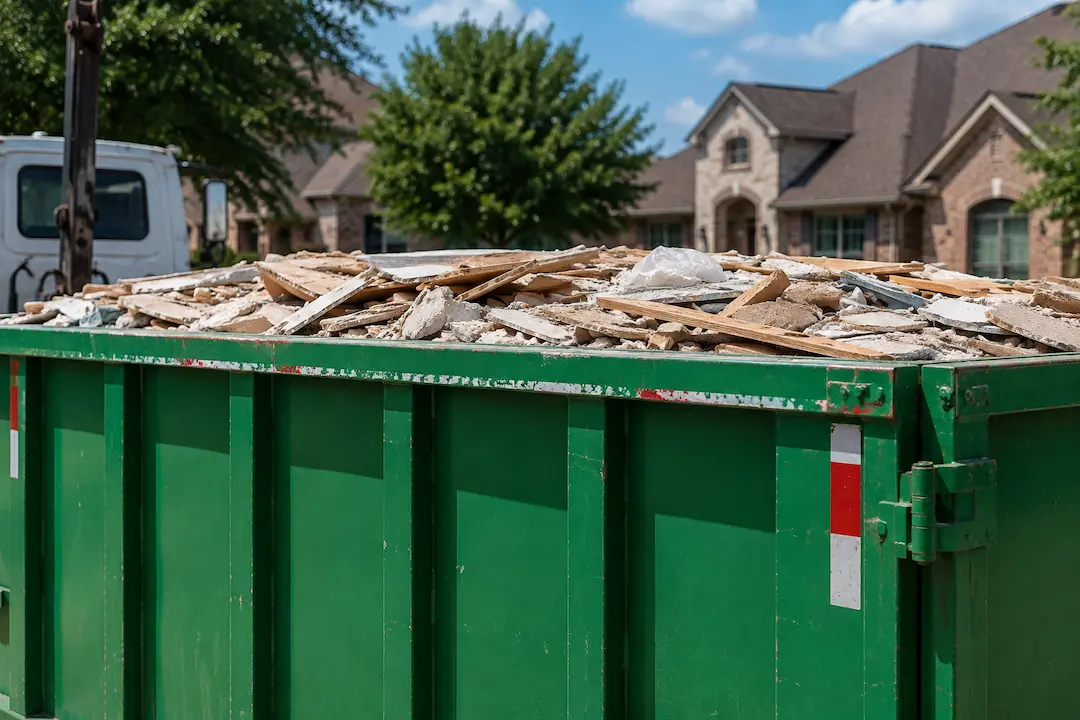
What Happens If You Overfill a Dumpster and Have to Stop Loading Before the Job’s Done?
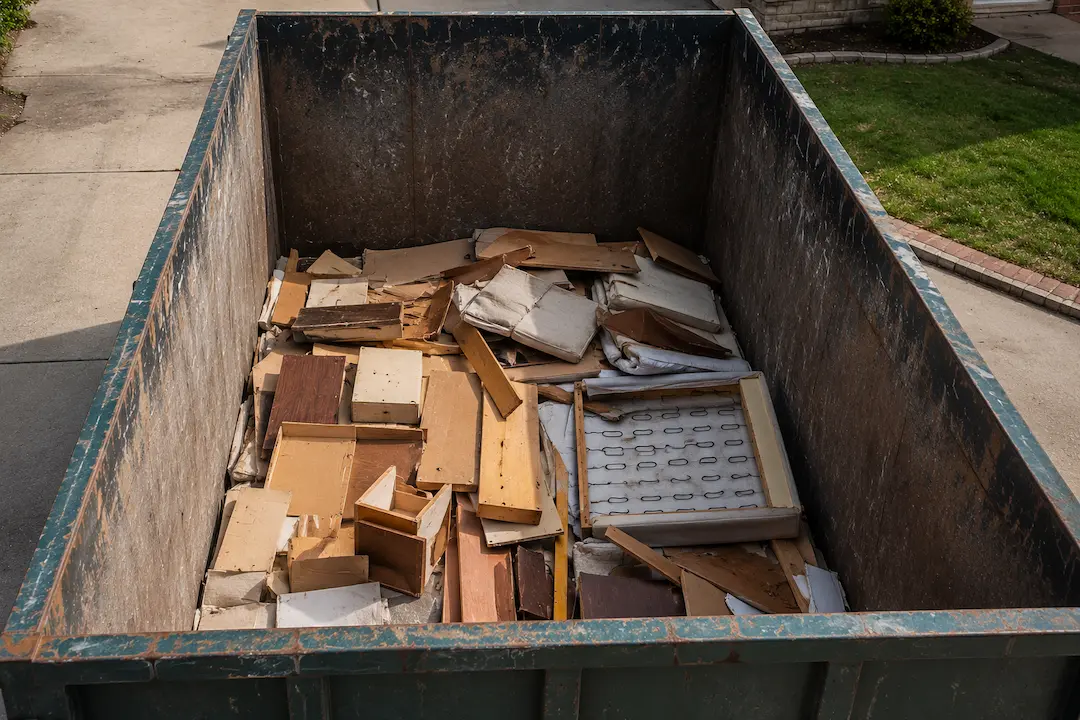
Every roll-off container has a fill line, usually level with or just below the top rim of the walls. Loading debris above that line is not just a guideline, it is a safety and legal issue. A truck cannot legally haul a container with material piled above the rim on Texas roads, and most drivers will not attempt it because loose debris can shift or fall during transport. If you overfill a dumpster, the typical options are removing material back down to the fill line before it can be hauled, tarping and re-securing the load if it only slightly exceeds the line, or leaving it and scheduling a return trip once it is brought back into compliance.
Weight matters as much as height here. A dumpster that looks half empty by volume can already be at its weight limit if the waste is dense, think concrete, roofing shingles, or wet drywall. That’s a capacity problem, not a scheduling problem, and it produces the same result: the crew has to stop loading and figure out next steps before the haul.
None of this means the project is stuck. It means the next load of debris needs somewhere else to go until either the current container is emptied or a new one arrives, which is exactly what a swap-out service solves.
Where Is the Fill Line on a Roll-Off Dumpster?
Every roll-off dumpster has an understood fill line a few inches below the top edge of its sidewalls, even though it’s rarely painted or marked on the container itself. The line exists for one practical reason: a loaded roll-off has to be covered with a tarp before it’s driven anywhere, and a tarp can’t lie flat over debris that’s mounded above the walls. Frontier’s own container specs illustrate why the line matters differently by size — a 20-yard container’s sidewalls run about 4 feet tall, a 30-yard about 6 feet, and a 40-yard about 7.5 feet, so “full” looks different depending on which size you’ve booked. Loading to the fill line rather than to the physical top of the walls gives the crew room to tarp the load flat and keeps debris from shifting or spilling once the container is on the truck.
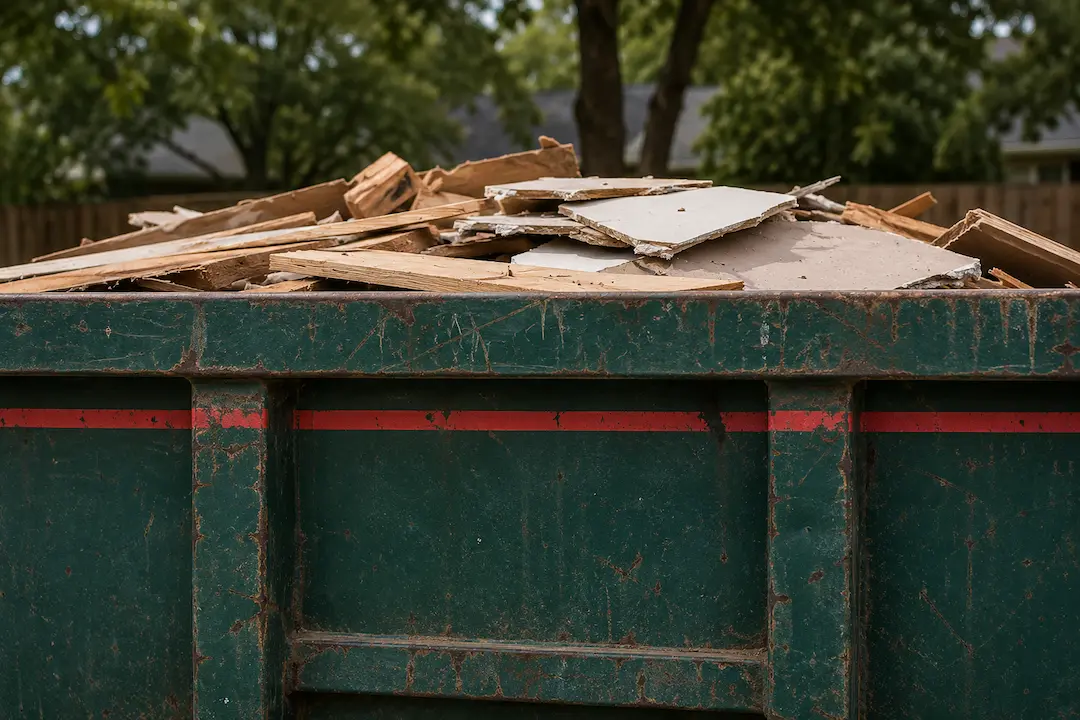
Does Heavy Debris Change How Full You Can Go?
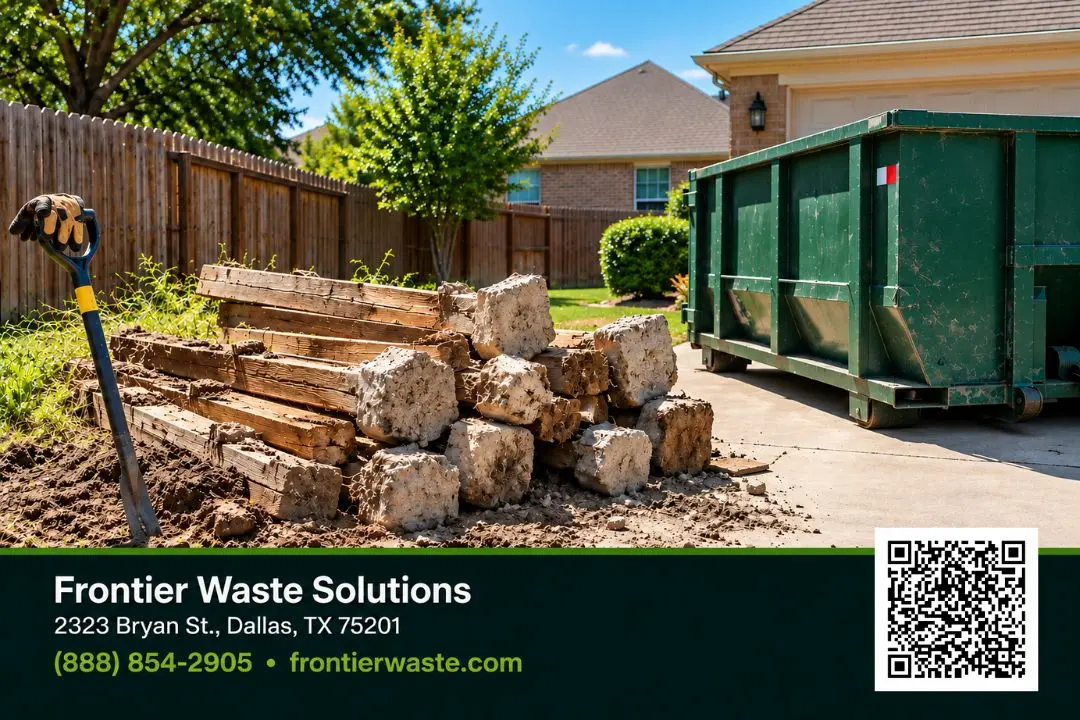
Yes, significantly. Weight, not volume, becomes the limiting factor the moment you’re loading dense material — dirt, brick, tile, roofing shingles, or concrete. A roll-off that could hold a full load of household junk to the fill line might hit its weight allowance at only a third or half that height when it’s loaded with debris like this instead. This isn’t unique to any one hauler: municipal roll-off programs across North Texas commonly instruct residents that dirt, rock, brick, or dry concrete should go in no more than half full, specifically because that material is so dense that a fuller load would push well past a safe, legal haul weight. The same logic applies to any private roll-off rental — if your project is generating heavy debris rather than bulky-but-light waste, plan on stopping well short of the rim and ask your hauler for guidance on how full to load before you start.
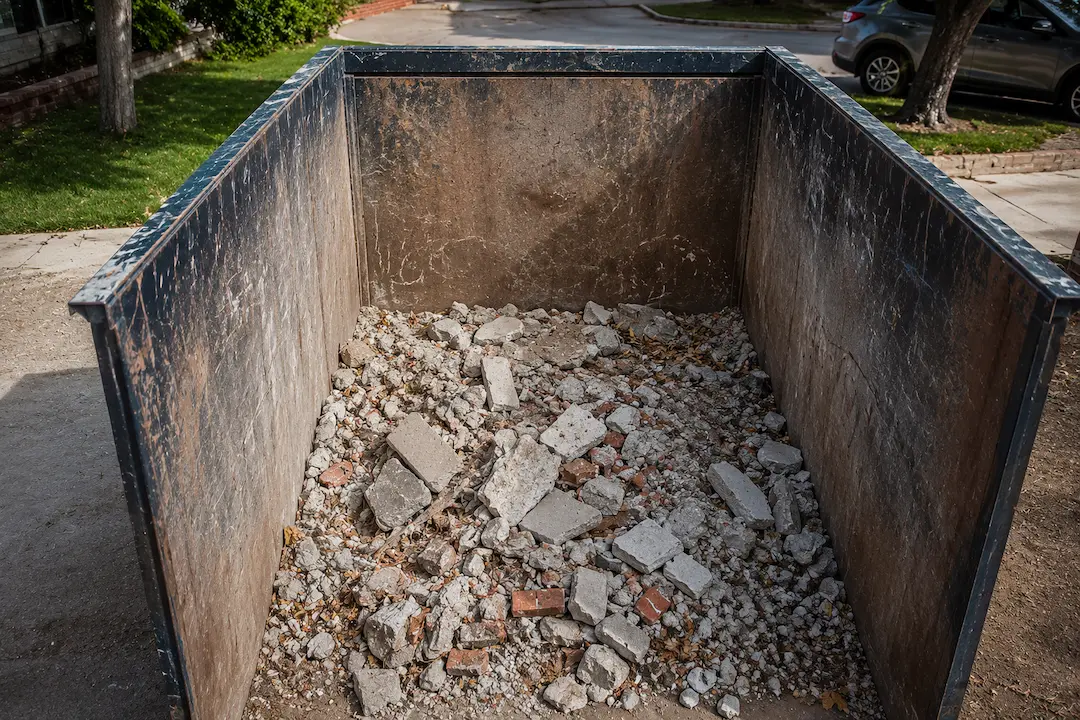
Why Do Haulers Care So Much About the Fill Line? (Tarping & Road Safety)
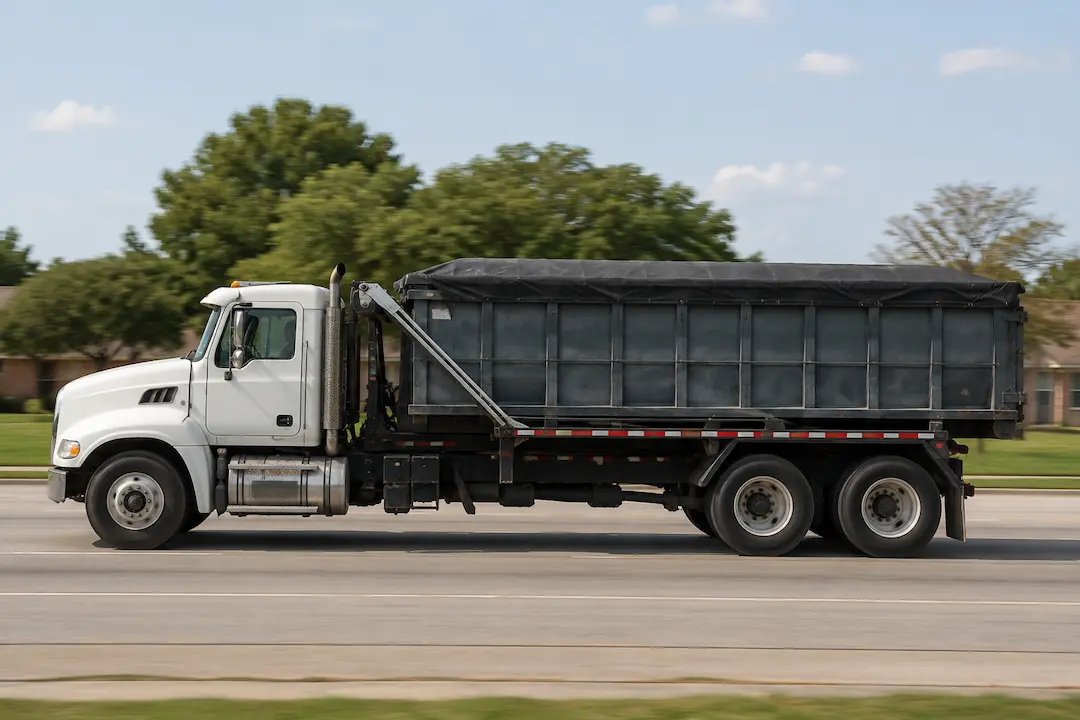
The fill line isn’t an arbitrary rule — it’s tied directly to what’s legally required once a loaded container leaves your property. A roll-off has to be tarped before it travels on public roads, and debris mounded above the sidewalls can’t be covered flat, which creates a real risk of material falling out onto the road during transit. On top of that, the truck hauling the container has to stay within standard axle-weight and gross-vehicle-weight limits that apply to every heavy truck on Texas roads — the same rules that make weight limits matter regardless of how a load looks from the outside. Staying at or below the fill line, and within the container’s weight allowance, is what keeps the load safe to cover, safe to haul, and legal to drive.
How Do You Load a Roll-Off So It Doesn’t Overfill?
A few habits go a long way toward keeping a load within both the fill line and the weight allowance:
- Load heavy items first, along the bottom. This keeps weight low and centered rather than piled on top, where it’s more likely to shift or tip the load.
- Break down bulky items. Flattened boxes, disassembled furniture, and broken-up debris take up far less volume than the same material left whole.
- Distribute weight evenly, side to side and end to end. An unevenly loaded container can be difficult or unsafe for the crew to lift.
- Mix light and heavy materials when you can. Loading all the concrete or dirt first, then filling remaining space with lighter debris, helps you use the container’s volume without blowing past the weight limit.
- Keep everything below the rim. If you’re not sure whether you’re approaching the fill line or the weight limit first, stop and ask — it’s easier to arrange an extra pickup than to deal with a load that gets turned away.
Quick FAQ
- Can I fill a dumpster with light debris all the way to the top?
- Generally yes, as long as it stays at or below the fill line so the load can still be tarped flat — light, bulky material is far more likely to hit the volume limit before the weight limit.
- Does the fill line apply the same way to concrete and dirt loads?
- The line itself is the same, but you’ll almost never reach it with dense material — the weight allowance will typically stop you well before the container looks full.
- What if my load is only a little over the fill line?
- Even a small amount above the rim can be enough to prevent a flat tarp seal, so it’s worth leveling the load before pickup rather than assuming a small excess will be fine.
- Can I request a second, smaller pickup instead of overfilling one container?
- In most cases, yes — an extra haul is generally simpler and cheaper than dealing with a load that gets turned away at pickup for being overfilled.
- Where is the fill line on a roll-off dumpster?
- The fill line is an unmarked but understood limit a few inches below the top rim of the container. Debris should sit flush with, or below, the top edge of the walls so a tarp can be pulled flat across the load before it is transported.
- What counts as an overfilled dumpster?
- There are two separate ways a dumpster can be overfilled: volume (debris piled above the rim, regardless of weight) and weight (the load exceeds the container tonnage allowance even if it sits below the rim). A container can fail on either measure on its own.
Not Sure How Full to Load Your Dallas Roll-Off?
Frontier Waste Solutions can walk you through the fill line and weight allowance for your exact container before you start loading — so pickup day goes smoothly the first time.
Request a Quote | (888) 854-2905
2323 Bryan St, Suite 2620, Dallas, TX 75201
(888) 854-2905
What Is a Dumpster Swap-Out or Removal When the Job Isn’t Done?
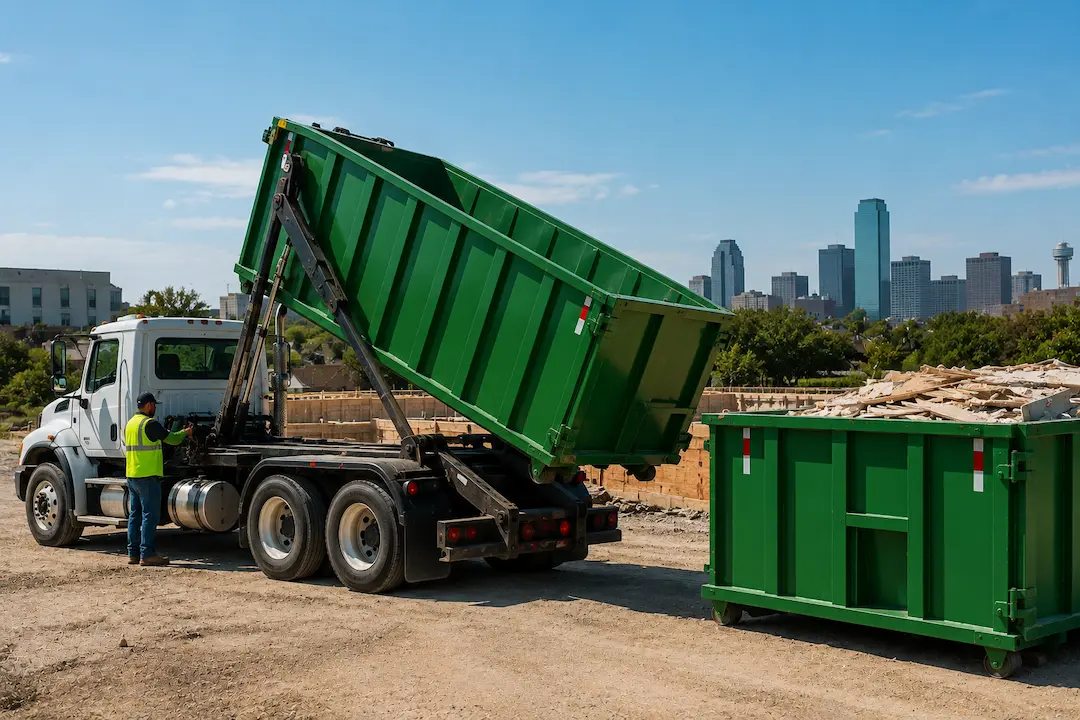
A swap-out, sometimes called a haul-and-return, is when the same truck visit removes the full container and drops an empty one in its place. Instead of scheduling a separate delivery days later, the crew gets a fresh container in the same footprint where the old one sat, usually within the same visit or the same day. This is the standard swap-out service when the dumpster fills up before the job’s done on most Dallas renovation and construction jobs.
The mechanics are simple on your end. You call or submit a request, confirm the pickup date and that the container is genuinely ready (loaded to the fill line, nothing blocking truck access), and the driver handles the rest, backing up to the container, hooking it, pulling it onto the truck bed, and setting down an empty one before leaving. Understanding how a temporary roll-off rental is scheduled from drop to haul in the first place makes the swap step easier to picture, since it is really the same delivery and pickup process happening again mid-project instead of only at the start and end.
Can You Get an Additional Dumpster Instead of Swapping?
Yes, if there is room. Rather than removing the full container and waiting on a replacement, some sites simply bring in an additional dumpster and place it alongside the first. This works best when the project has enough clear space for two containers, when the remaining work will generate roughly as much debris as what is already loaded, or when different material types need to stay separated, for example clean wood waste in one container and mixed demo debris in another.
This approach shows up most often on larger or multi-phase builds, whether for a homeowner project or a growing business, where a single container was never going to cover the whole scope anyway. Frontier commonly sets up job-site containers on multi-phase builds from the start, with the expectation that multiple dumpsters will stay on site as the project moves through phases, rather than treating the first container as the only one for the duration.
The trade-off is space and cost. A second container needs its own clear, accessible spot, and it is billed as its own rental rather than an exchange, so it is worth comparing against a straight swap before deciding.
How Fast Can a Dumpster Removal or Swap Happen in Dallas?
Turnaround depends on the driver’s existing route for that day and how far your site is from other stops already scheduled, so it is worth thinking of a swap as route-dependent rather than instant. In practice, a same-day or next-morning turnaround is common once you call in a container that is genuinely full and ready to go, but it’s worth trying to reach Frontier’s dispatch team directly to confirm actual timing for your specific date and location before you count on it.
If your project runs on a recurring basis rather than a single job, a standing commercial account with scheduled pickup service from your local Frontier team can remove the guesswork entirely, since pickups are already built into a schedule instead of triggered by a one-off call.
One more Dallas-specific detail worth flagging before your swap: if the container sits on a driveway or other private property, placement is generally straightforward. If it needs to sit on a street, sidewalk, or other public right-of-way, check with the City of Dallas or your Frontier rep first, since public placement can require a permit depending on location and duration.
Is It Cheaper to Swap or to Rent a Bigger Container Upfront?
There is no single right answer here, it depends on how predictable your debris volume is. A swap-out adds the cost of an extra haul, essentially a second pickup-and-delivery service on top of the original rental. Renting one size up from the start avoids that second haul entirely but costs more on day one and may leave you paying for space you never fill if your estimate runs high instead of low.
As a rough rule, if you are fairly confident about your volume and just want a buffer, sizing up front usually costs less overall than sizing correctly and swapping later. If your project scope is uncertain, demolition projects are a common example, starting smaller and swapping if needed avoids overpaying for capacity you might not use, especially if your project schedule is still developing. Either way, it helps to see what a second haul adds to the total before deciding, since the answer changes based on your project’s size and location.
Dumpster rental length factors into this too. Frontier’s published container information cites a 7 to 10 day rental window as typical, with the option to extend at a flat daily rate for longer projects. If you already know your project will run past that window, it is worth confirming the exact dates when you book rather than assuming the standard window applies, since a swap and a rental extension are two different things that solve different problems.
What Size Dumpster or Bin Do You Actually Need?
Picking the right container size the first time is the best way to avoid a mid-project swap altogether. Frontier’s Dallas fleet runs three standard roll-off dumpsters, and the gap between them is bigger than it might look on paper.
Fill Limits by Dumpster Size
A 20-yard container measures roughly 20 feet long, 8 feet wide, and 4 feet tall, and holds about 6 pickup truck loads of debris. It fits single-room renovations, roofing tear-offs, and small cleanouts. A 30-yard container steps up to roughly 22 feet long, 8 feet wide, and 6 feet tall, holding about 9 pickup truck loads, or somewhere around 170 to 190 standard 33-gallon trash bags worth of volume. This size covers larger renovations, whole-home cleanouts, and most mid-size construction jobs. A 40-yard container, at roughly 22 feet long, 8 feet wide, and 7.5 feet tall, holds about 12 pickup truck loads and is built for full demolitions, large-scale construction, and major commercial cleanouts generating heavy, bulk waste. Each size comes with its own fill limits, so matching capacity to your project keeps you from hitting the wall days before the work is done. (Figures pulled live from frontierwaste.com/roll-off-dumpster-sizes/ on 2026-08-27, worth confirming against the current rate card since a second live Frontier page lists slightly different 30 and 40-yard dimensions, see flag #9 above.)
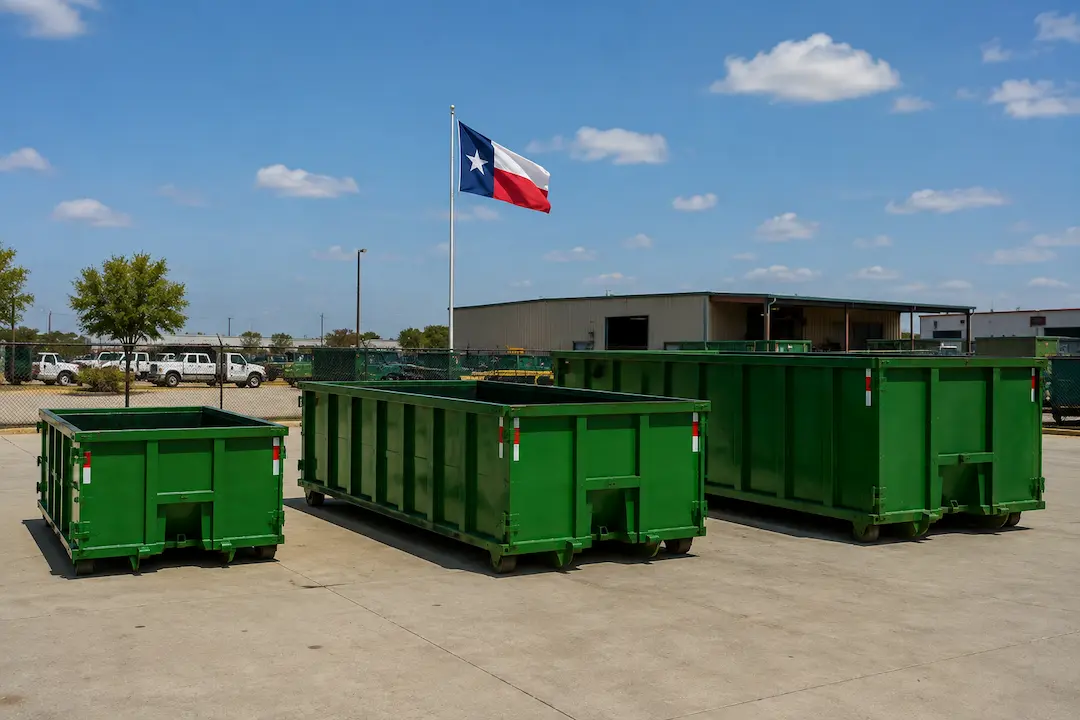
The footprint gap between a 20 and a 30 matters more than the yardage number suggests, since it is roughly 50 percent more volume in a container that is only a few feet longer and taller. If your project sits right on the line between two sizes and you would rather not deal with a dumpster full before the job’s done, sizing up front is usually the more predictable choice over betting on a swap partway through.
Whatever size you land on, the same basic dumpster rental process applies across Dallas and the surrounding suburbs: the container gets delivered where you need it, you load it at your own pace, and if the dumpster is full before the job’s done, a swap or a second container keeps the project moving instead of stalling it. If you’d rather get ahead of debris management from day one, sizing up front is the simplest way to do it, and Frontier’s team is here to support the decision either way.
Dumpster Full and Fill Line: Dallas FAQs
- What happens if my dumpster is full before the job’s done?
- The project does not have to stop. Once a container is loaded to its fill line, you request either a swap-out (the full container is hauled away and an empty one is dropped in its place) or, if there is room, a second container placed alongside the first. Which option makes sense depends on your remaining site space and how much debris is left to generate.
- Can I keep loading a dumpster past the fill line?
- No. Material piled above the container’s fill line cannot legally be hauled on the road, and most drivers will not attempt to transport an overloaded container for safety reasons. Debris above the line typically needs to come back down, or the load needs to be tarped and secured, before pickup can happen.
- What is a dumpster swap-out?
- A swap-out, or haul-and-return, is when the same truck visit removes your full container and sets down an empty one in its place, usually within the same visit or the same day. It is the standard way to keep a project moving when the original container fills up before the work is finished.
- Can I get a second dumpster instead of swapping the first one?
- Yes, as long as your site has enough clear, accessible space for two containers. This is common on larger or multi-phase construction jobs, or when different debris types need to stay separated rather than mixed in one container.
- How fast can a dumpster swap happen in Dallas?
- Turnaround depends on the driver’s existing route for that day, but a same-day or next-morning swap is common once a full, ready container is called in. Confirm exact timing with Frontier’s dispatch team for your date and location.
- Is it cheaper to swap dumpsters or rent a bigger one upfront?
- It depends on how predictable your debris volume is. A swap adds the cost of an extra haul cycle, while renting one size up front avoids that second haul but costs more on day one. If your volume is fairly predictable, sizing up front is often the lower total cost.
- What size dumpster do I actually need for my project?
- Frontier’s Dallas fleet runs 20, 30, and 40-yard roll-off containers, holding roughly 6, 9, and 12 pickup truck loads of debris respectively. A 20-yard container suits single-room renovations and small cleanouts, a 30-yard fits larger renovations and mid-size construction, and a 40-yard is built for full demolitions and major cleanouts.
- Where is the fill line on a roll-off dumpster?
- The fill line is an unmarked but understood limit a few inches below the top rim of the container. Debris should sit flush with, or below, the top edge of the walls so a tarp can be pulled flat across the load before it is transported.
- What counts as an overfilled dumpster?
- There are two separate ways a dumpster can be overfilled: volume (debris piled above the rim, regardless of weight) and weight (the load exceeds the container tonnage allowance even if it sits below the rim). A container can fail on either measure on its own.
Need a Dumpster Swap or Pickup Service in Dallas?
If your dumpster is full before the job’s done, we can usually get a swap or a second container out fast. Tell us where you are in the project and we’ll figure out whether a swap, a second container, or a bigger box up front makes the most sense.
Request a Quote | (888) 854-2905
2323 Bryan St, Suite 2620, Dallas, TX 75201
(888) 854-2905