Choosing between a front load and roll-off dumpster affects project efficiency and budget. Front load dumpsters work best for ongoing commercial waste needs at businesses and apartment complexes, while roll-off dumpster rental handles temporary projects like renovations, construction jobs, and major cleanouts. Most people don’t realize these two container types serve completely different purposes.
This guide lays out how each one works, what it costs, and the questions to ask before ordering either one.
What a Front-Load Dumpster Is
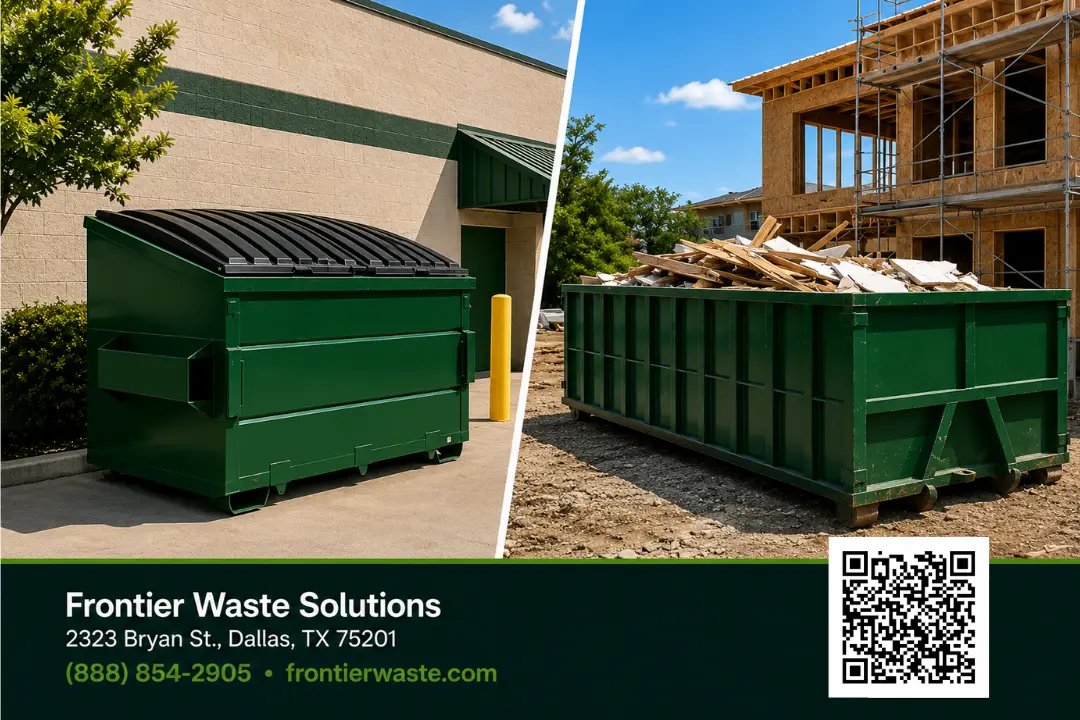
A front-load container is a steel bin, usually between two and eight cubic yards, that sits at the side or rear of a commercial property and is emptied on a set schedule. A truck with lifting forks grabs the bin, empties it over its body, and sets it back down in the same spot. There is no delivery, fill-it-yourself, and haul-away cycle the way there is with a roll-off. The container simply stays on site and gets serviced once or several times a week.
These are the containers you see outside restaurants, retail shops, offices, and apartment complexes, and they are matched to waste that keeps coming back week after week.
What a Roll-Off Dumpster Is
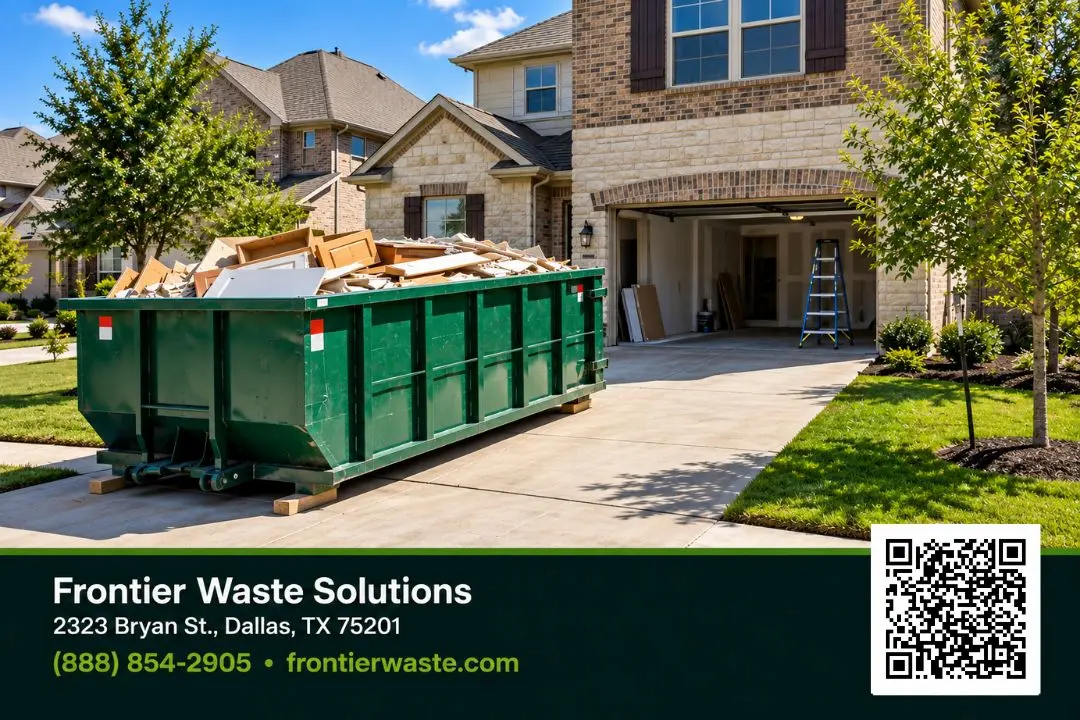
A roll-off dumpster is a much larger open-top container, from 10 up to 40 cubic yards, that is delivered empty, filled over a rental period by whoever is running the project, and hauled away when the job is done. The steep feature is the size range: a 30-yard roll-off can swallow in one project what a small front-load bin would take a month to fill. Roll-offs are the workhorse for home renovations, roofing tear-offs, landscaping cleanouts, and construction debris.
Front Load vs. Roll-Off: Which One for Your Situation?
Ask these four questions and the answer usually becomes obvious:
- Is the waste ongoing or one-time? Weekly trash that never stops is a front-load job. A chunk of debris from a single project is a roll-off job.
- Who gains access? A front-load bin is emptied by the hauler on a schedule, so employees and tenants just toss waste in. A roll-off is filled by whoever is doing the work.
- How much space is there? A compact 4-yard or 6-yard front-load bin fits tight commercial lots. A 20 to 40-yard roll-off needs a long, flat area for the truck to set it down.
- How is it priced? Front-load service is a monthly agreement with pickups included. A roll-off is a per-haul rental.
When a Business Needs a Front-Load Container
Restaurants, offices, strip malls, and apartment properties generate steady waste that doesn’t wait for a renovation. For those, a front-load container under a commercial trash pickup service keeps the lot clean with regular, scheduled hauls. The bin size and pickup frequency are set to the property’s volume, so the container rarely overflows and the account cost is predictable month to month.
When a Project Needs a Roll-Off
Once there is a construction site or a home remodel in the picture, the container type flips. A single dump run from a full kitchen renovation can amount to ten pickup-truck loads plus, which is roll-off territory. Contractors and homeowners order a 20, 30, or 40-yard box, fill it over days or a couple of weeks, and the truck comes back once to swap it. See the roll-off dumpster sizes guide to match the box to the job.
Can You Use Both at Once?
Yes. A business running a remodel or a sizable renovation frequently keeps its regular front-load service for daily trash and adds a roll-off just for the demolition debris. The two containers do not compete, they handle different waste streams from the same property.
How Pricing Compares
Front-load service is billed as a recurring monthly haul, while a roll-off is billed per delivery and pickup. Neither is cheaper across the board: a property that fills a bin weekly is wasteful paying per-haul on a roll-off, and a one-off project rented as a monthly front-load account would outlive the need. For a single project, get a quote on the container size you need with weight included; see current Dallas dumpster rental prices for a sense of the per-haul rate.
Front Load vs. Roll-Off Dumpster FAQs
- How big is a front-load dumpster?
- Most front-load containers range from two to eight cubic yards, typically six to eight feet long and up to about six feet tall. The right size depends on how much waste the property produces between pickups.
- How often is a front-load dumpster emptied?
- Schedule varies by the property’s volume, usually once, twice, or three times a week. The hauler confirms a fixed pickup routine so the bin does not overflow.
- Can I rent a front-load dumpster for just one week?
- A front-load bin is set up as a recurring service rather than a single rental. For a one-time cleanup or project, a roll-off dumpster rented per haul is the matching option.
- What size roll-off do businesses use for one-time cleanouts?
- Businesses running a single cleanout or construction project typically use a 20-yard or 30-yard roll-off, and a 40-yard for large demolition or build-outs.
- Which is cheaper: front load or roll-off?
- It depends on the volume pattern. Recurring weekly waste is cheaper as front-load service; a one-off pile of debris is cheaper as a roll-off rental. Comparing the monthly haul rate against the per-haul rental rate settles it quickly.
Get a Quote for Your Dallas Container
Request a Quote | (888) 854-2905
2323 Bryan St, Dallas, TX 75201
(888) 854-2905