How many dumpsters apartment complex properties need in Dallas comes down to a handful of factors: unit count, container size, and how often pickups run. If you manage or own an apartment complex in Dallas, getting trash service right is a balancing act. Too few containers and you’re fielding overflow complaints and pest calls. Too many and you’re paying for capacity — and losing parking or green space — you don’t need. This guide walks through how to estimate dumpster count for a multifamily property, what sizes actually work, how often pickups should run, and what Dallas requires around recycling and collection responsibility.
How Many Dumpsters Per Apartment Complex Is the Standard?
There’s no single legal number that applies everywhere, but there is a widely used industry starting point for how many dumpsters an apartment complex needs: plan for roughly one 6- to 8-yard front-load dumpster for every 25 to 30 units, based on each apartment generating about 0.5 to 1 cubic yard of trash per week. For a 100-unit property, that math points to somewhere around three to four dumpsters of that size, or fewer if you’re using larger containers or more frequent pickups.
Treat this as a planning estimate rather than a fixed formula. Actual container needs shift based on unit mix (studios generate less waste than three-bedroom units), tenant turnover, whether the property has an active recycling program pulling volume out of the trash stream, and any local ordinance minimums. The most reliable way to land on an exact number is to have a waste provider walk the property and size it to the real waste stream, not just the unit count.
What Size Dumpster Works Best for an Apartment Complex?
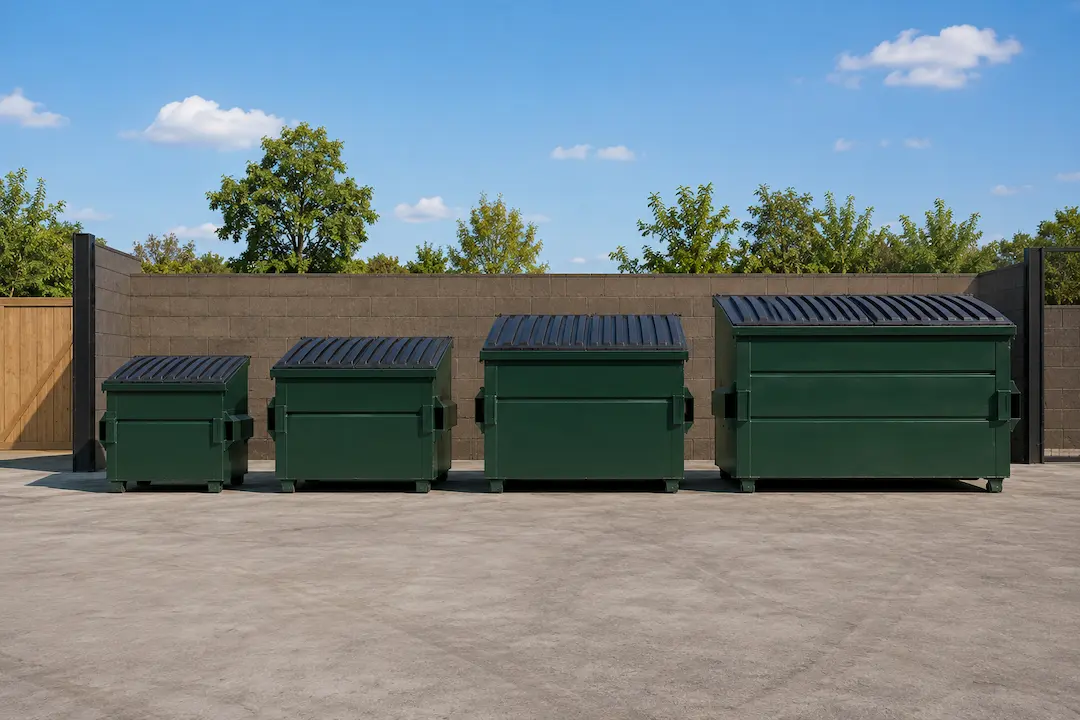
Frontier services front-load dumpsters in 2, 4, 6, and 8-yard sizes for apartment communities, and container choice generally tracks with property size:
- 2-yard: Best for small complexes or properties with only a handful of units and light, regular pickup needs. Available on casters for easier positioning.
- 4-yard: A common mid-size choice for complexes generating a moderate, steady volume of household and kitchen waste.
- 6-yard: Suited to larger communities with multiple tenants sharing a corral and enough on-site space to accommodate it.
- 8-yard: The largest recurring front-load option, generally reserved for properties with a high number of units and a high-volume waste stream.
All sizes are available with gravity bar locks and lid locks to help control contamination and unauthorized dumping, which matters in shared corrals where non-residents sometimes attempt to use apartment containers.
How Often Should Apartment Complex Dumpsters Be Emptied?
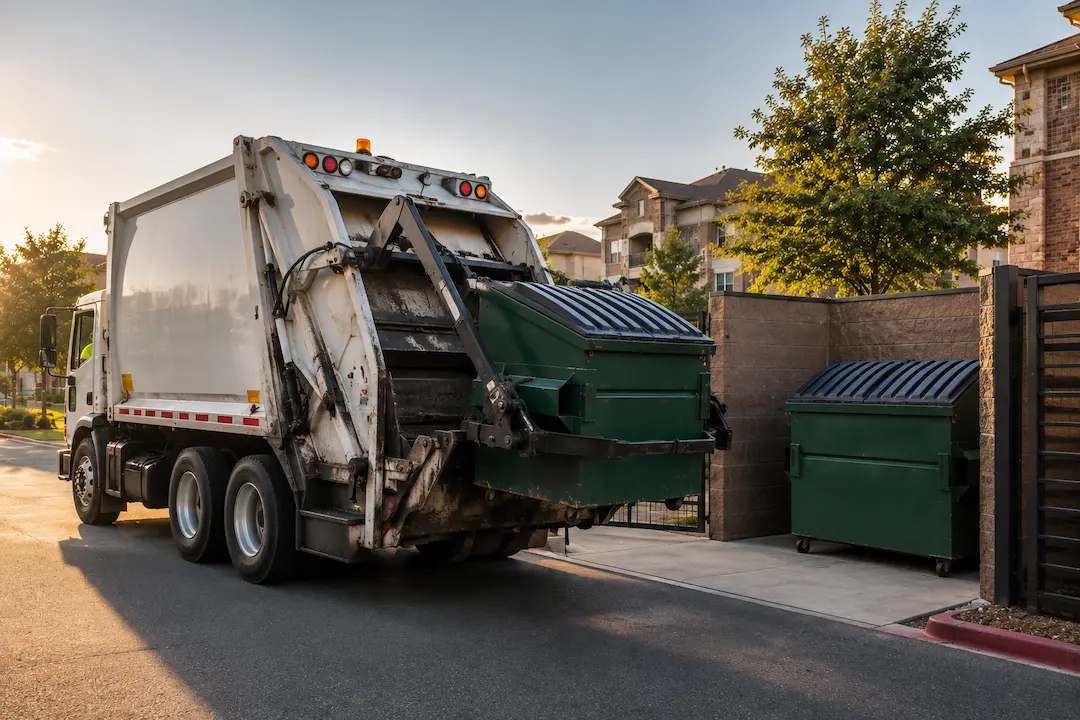
Pickup frequency for apartment complexes can run anywhere from weekly up to 6 times a week, and the right cadence depends on container size relative to how fast the property fills it. A smaller container emptied several times a week often works better in a tight corral than a single large container collected once a week — it reduces the odor and pest issues that come with trash sitting for days, and it can also be easier to fit into limited on-site space.
Larger communities with high turnover or heavy seasonal move-out volume typically need to lean toward the higher end of that frequency range, while smaller, lower-turnover properties can often run on a weekly or biweekly schedule without overflow problems.
Who Is Responsible for Trash Service at a Dallas Apartment Complex?
The City of Dallas provides residential garbage and recycling collection directly, using roll carts, only to single-family homes and duplexes. Apartment complexes and other multifamily properties fall outside that direct-service category — they may request collection through the City’s Sanitation Services department, or they may contract with a private solid waste hauler authorized to operate in the city.
In practice, most apartment communities in Dallas arrange service through a private hauler rather than the city cart program, since front-load and compactor service fits multifamily waste volume better than residential roll carts. If you’re unsure which arrangement currently applies to your property, it’s worth confirming directly with the City of Dallas Sanitation Services department, since service arrangements can vary by property history and can change.
Do Dallas Apartments Have to Provide Recycling?
Yes. Dallas’s Multifamily Recycling Ordinance took effect January 1, 2020, and requires all multifamily properties with 8 or more units to provide recycling service to residents, with a minimum recycling capacity of 11 gallons per unit per week. Recycling can be offered through dumpsters, bins, chutes, or valet-style collection, and containers generally need to be placed within visible distance of the trash containers.
Property managers overseeing 8+ unit communities should verify current compliance requirements directly with the City’s Sanitation Services / Zero Waste team before finalizing a recycling setup, since specific placement and reporting requirements are enforced by that department and worth confirming for your exact property.
What Can You Do When Apartment Complex Dumpsters Keep Overflowing?
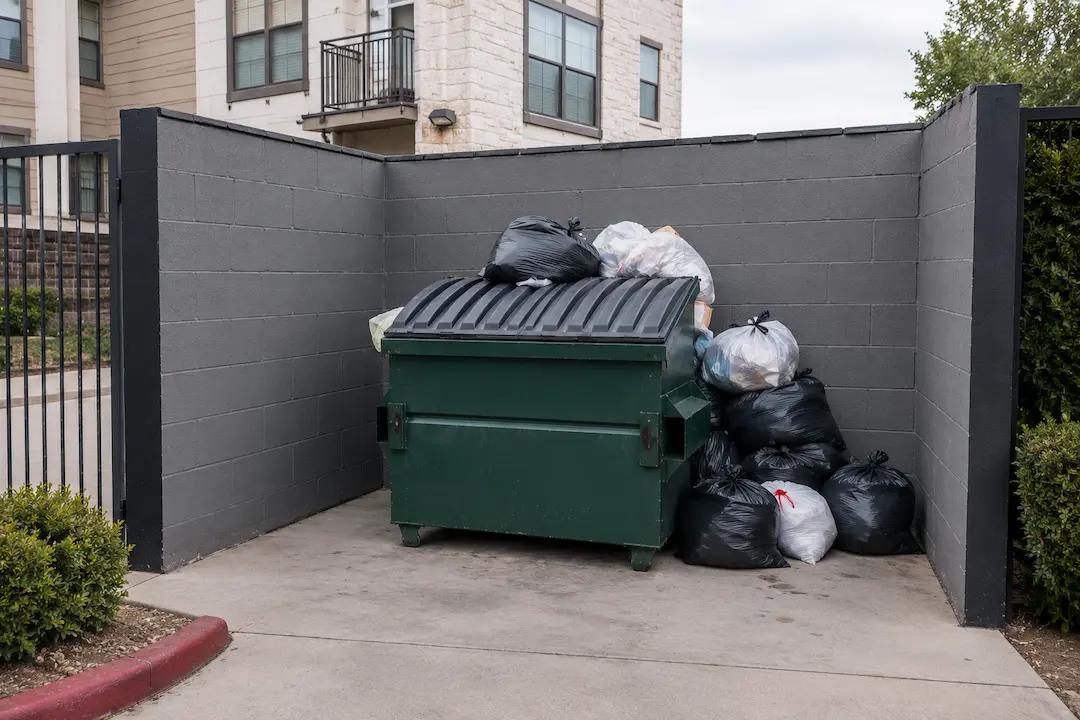
Chronic overflow is almost always a sign that the container size or pickup frequency for an apartment complex doesn’t match the property’s actual waste volume anymore — often because occupancy grew, a recycling program lapsed, or a nearby corral got harder to access. A few practical fixes:
- Upsize the container. If a 4-yard is consistently full before pickup day, moving to a 6- or 8-yard is often simpler than adding pickup days.
- Add pickup frequency. Sometimes the container size is fine and the schedule just hasn’t kept pace with occupancy.
- Consider a compactor. For very high-volume properties, a compactor reduces the volume of waste sitting on-site and can cut down on the number of pickups needed.
- Add a second container. Splitting waste across two corrals can relieve pressure on a single high-traffic dumpster.
- Set clear bulk-item rules. Furniture and large discarded items left beside (rather than in) dumpsters are one of the most common causes of “overflow” complaints — a clear bulk pickup policy for move-outs can solve this without touching container size at all.
Quick FAQ
- Compactor vs. dumpsters — which is better for a large complex?
- Compactors make sense once a property is generating enough volume that pickup frequency becomes a recurring cost and logistics issue — generally larger communities with 100+ units. Smaller and mid-size properties are usually well served by front-load dumpsters sized correctly for the unit count.
- Do dumpster enclosures need to meet specific requirements?
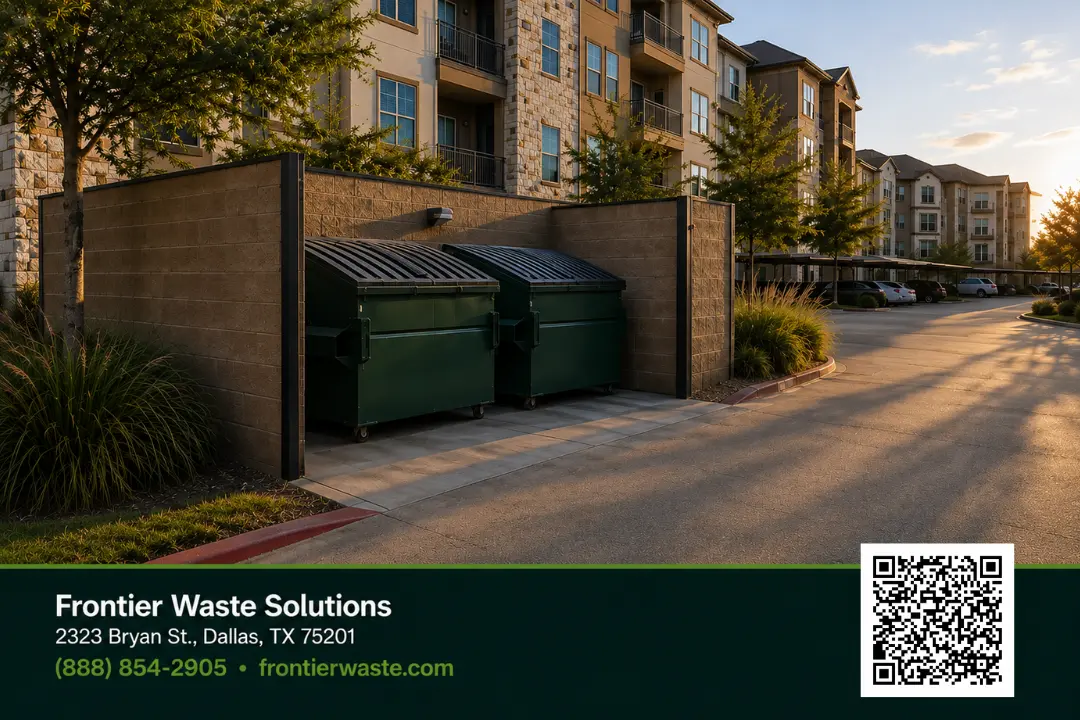
- Enclosures should give the collection truck enough clearance to access and maneuver the container, and should be built to accommodate the specific dumpster size chosen — mismatched enclosure dimensions are a common and avoidable planning mistake.
- Can multiple buildings share one dumpster?
- Yes, shared dumpsters are common in multifamily settings, but the container needs to be sized for the combined waste volume of every unit using it, not just one building’s share.
- What about bulk items like old furniture?
- Bulk furniture generally shouldn’t go into a regular front-load dumpster. A separate bulk pickup or roll-off arrangement during move-out season helps keep the everyday trash containers from overflowing.
Get the Right Dumpster Setup for Your Dallas Apartment Complex
Still not sure how many dumpsters your apartment complex needs? Frontier Waste Solutions can size and schedule your trash service to match the property’s real waste stream — not just a rule of thumb.
Request a Quote | (888) 854-2905
2323 Bryan St, Suite 2620, Dallas, TX 75201
(888) 854-2905