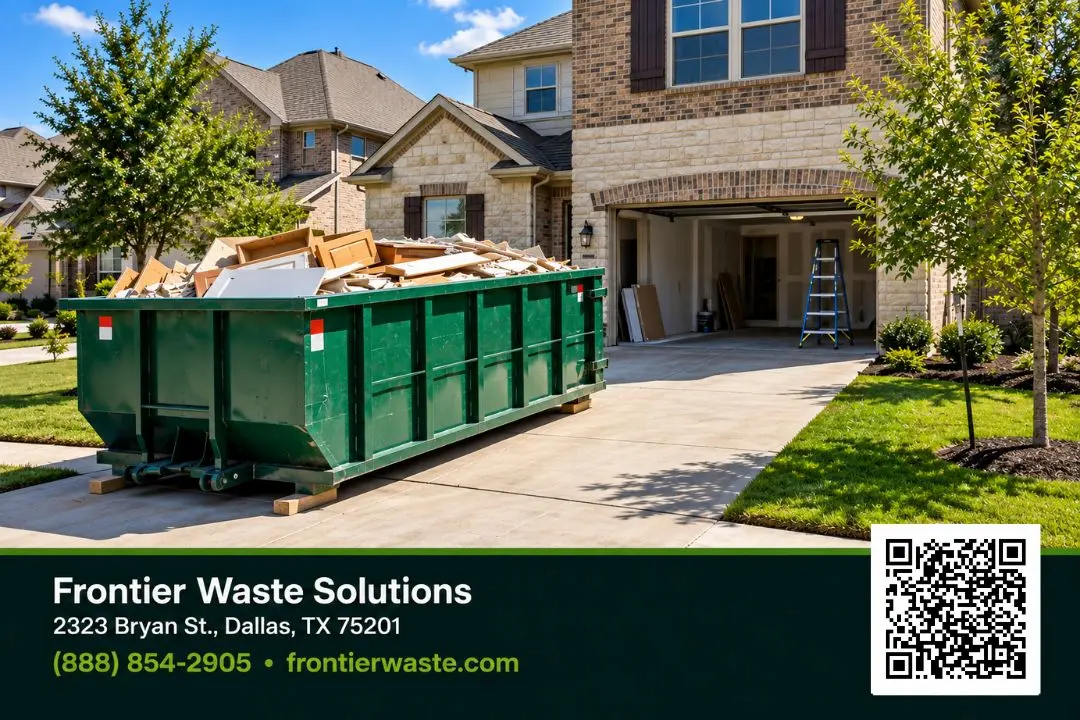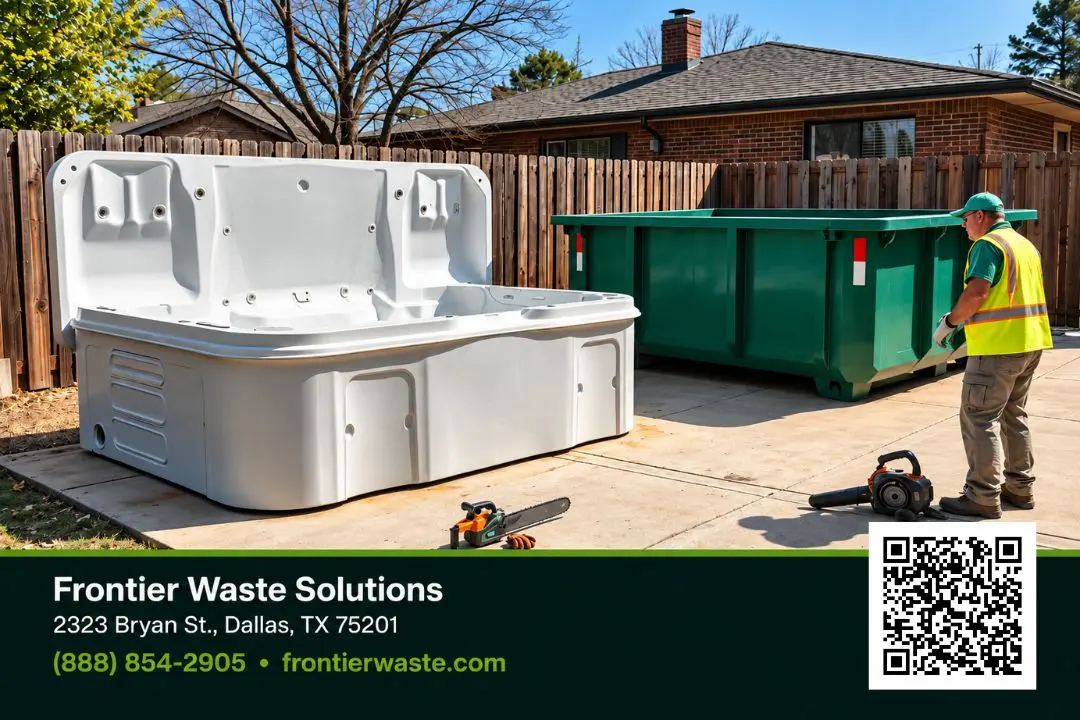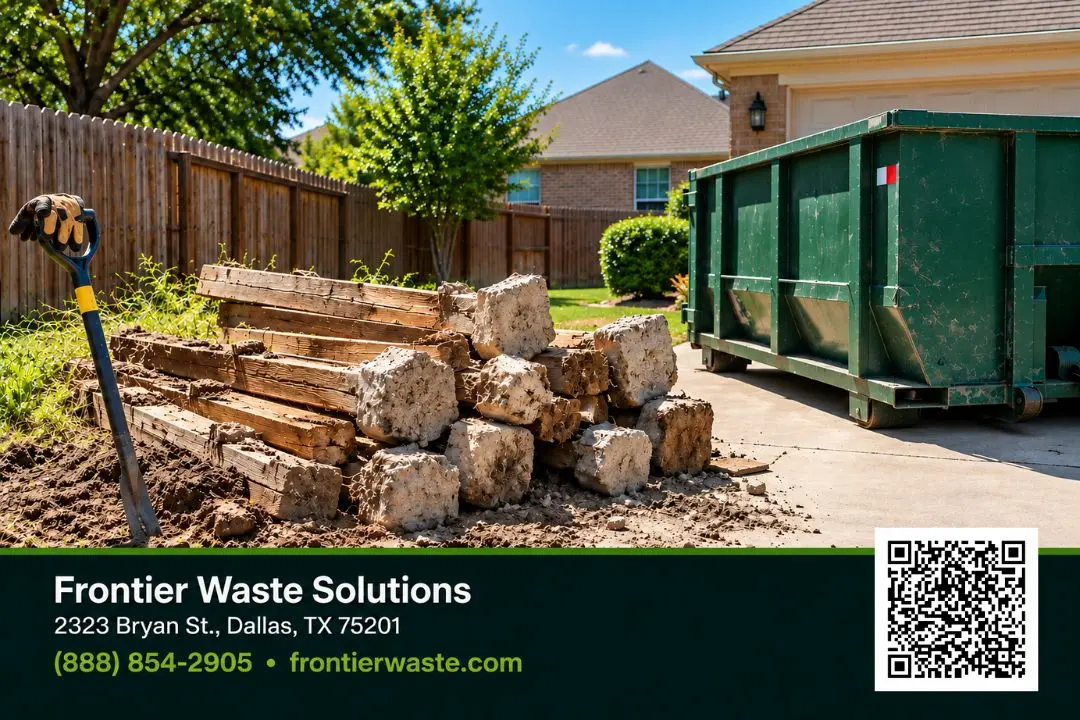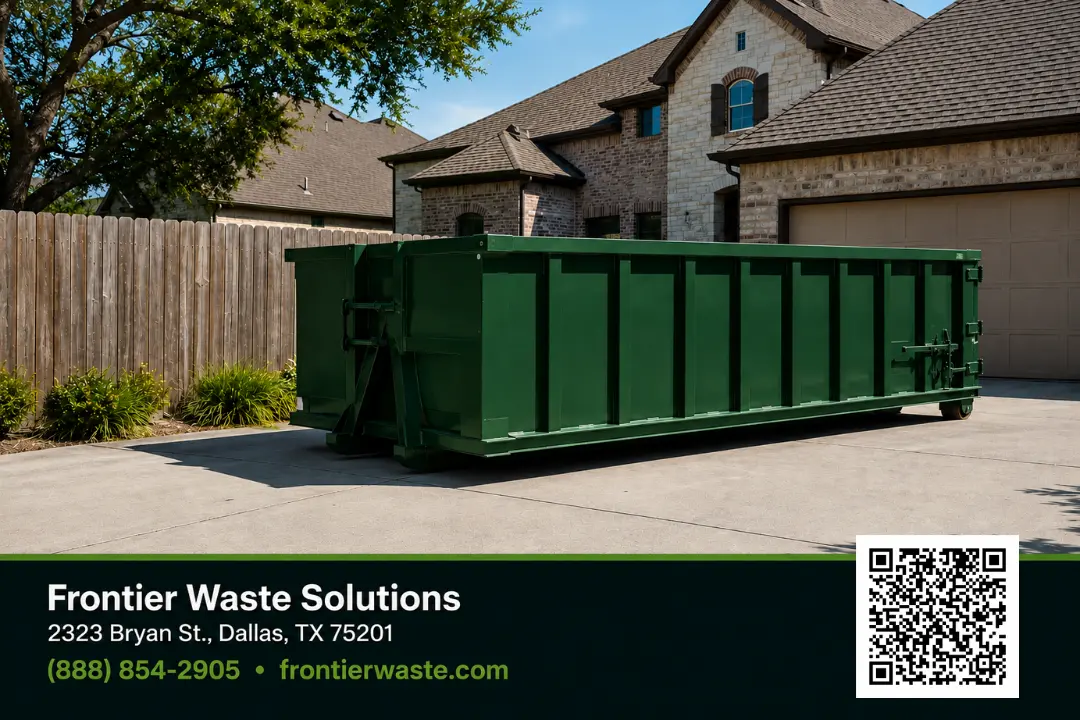
If you rent a roll-off container and wake up to find a neighbor’s couch, a contractor’s drywall, or a stranger’s bagged trash sitting on top of your load, you are not imagining things. It happens constantly in Dallas, where a rented dumpster sitting curbside or on an open lot looks like free disposal to anyone driving by. The good news is that you can keep people from dumping in your rented dumpster with a few placement and locking decisions made before the container even arrives, plus a clear plan for what to do if it happens anyway.
Why Does This Happen to Dallas Renters?
A roll-off dumpster is, by design, easy to spot and easy to reach. It sits at curb height, it usually has an open top, and unless you are actively working the site, nobody is watching it. In a dense city like Dallas, that combination invites what the industry calls “dumpster diving in reverse”: people using someone else’s rented container instead of paying for their own hauling or a trip to the transfer station. Homeowners tearing off a roof, businesses swapping out fixtures, and contractors running a multi-week job site all run into the same problem. It is rarely malicious. Most people adding to your dumpster assume an empty-looking container is fair game, especially overnight or on weekends when no one is on site to say otherwise.
It tends to show up more in a few specific situations around Dallas: alley-facing lots where the container is barely visible from the front of the house, driveways in dense neighborhoods where foot traffic is high, and job sites that stretch across several weeks with long stretches of downtime between crews. Renovation projects are especially prone to it, since the container often arrives before demolition actually starts and sits mostly empty for the first few days. Multi-family properties and shared driveways add another layer, since it can be genuinely hard for a neighbor to tell whose container is whose. None of this means you are stuck dealing with it. It just explains why the problem clusters around certain setups more than others, and why the fix is almost always about visibility, timing, and access rather than anything more complicated.
A well-placed dumpster rental rarely attracts this kind of trouble in the first place, but rented dumpsters across Dallas all share the same basic vulnerability: they are easy to reach and, for the first day or two, easy to mistake for shared space. Residential dumpsters tend to sit closest to the street, which is exactly why they draw the most casual additions, while commercial dumpsters near busy roads see the same thing from passing traffic instead of foot traffic. It is not always a total stranger, either. On a shared driveway or a duplex lot, neighbors sometimes assume an extra bag will not be noticed, and on a block with several projects going at once, it can be genuinely hard to tell which dumpster belongs to which house or which yard. None of this is really about bad intent, whether it is on a home renovation site or a commercial one, it is about a container looking, for a few days, like it belongs to nobody in particular.
How to Keep People From Dumping in Your Rented Dumpster
The single biggest factor is where the container sits. A dumpster placed close to the street, visible from the sidewalk, and easy to walk up to will attract far more unwanted trash than one tucked onto the property behind a gate or fence line. When you schedule delivery, ask about where a Dallas dumpster rental gets placed on your lot, and pick a spot that is functional for your project but not an open invitation from the street.
A few habits separate renters who never deal with unauthorized dumping from renters who deal with it every week:
- Order it close to when you need it. An empty container sitting for days before your project starts is the single most common mistake. The longer it sits unused, the more likely someone treats it as public.
- Keep it inside a fence or driveway gate whenever possible. Even a low barrier changes the calculation for a passerby.
- Avoid leaving it visibly empty overnight. If you can time delivery so the container fills quickly, you shrink the window where it looks abandoned.
- Post a simple sign. A printed notice that the container is private property and monitored is a low-cost deterrent that works surprisingly often.
- Loop in your hauler for longer jobs. If a project is going to stretch across several weeks, ask about contractor dumpster service for sites that stay open for weeks, since ongoing job sites usually get more frequent swap-outs, which limits how long any single container sits idle and inviting.
Extra Habits That Stop Dumpster Misuse and Prevent Illegal Use
A few extra habits stop dumpster misuse and prevent illegal dumping before either one starts, and none of them require special equipment. They work on renovation projects and longer commercial projects alike. Here are the tips that matter most, and they cost little more than a few minutes to set up.
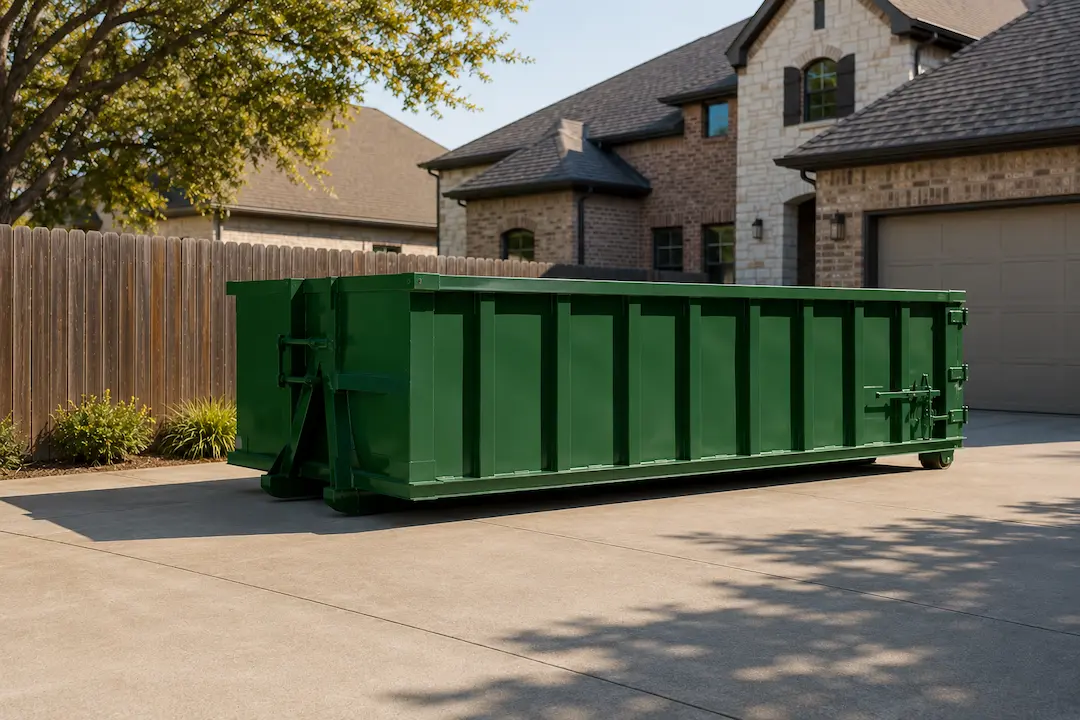
Build a Simple Dumpster Enclosure or Add Fencing
A three-sided dumpster enclosure, built from fencing, pallets, or lattice with the open side facing your work area, is one of the more effective physical barriers you can add. It blocks casual access from the street or a shared driveway, and it changes how neighbors see the container, not as a free-for-all, but as something that clearly belongs to someone. Even a partial dumpster enclosure helps. On multi-family properties, neighbors often cannot tell whose dumpster is whose, so anything that visually marks the dumpster area as private and monitored works better than most people expect. These barriers work on dumpsters of every size, from small residential drop-offs to full commercial builds, and they pair especially well with the placement tips above. A quick, friendly conversation with neighbors before a project starts can also head off most of this before it ever happens.
Post Clear Signage and Install a Camera Near the Dumpster Area
Post clear signage near the dumpster stating that the container is private property and actively monitored. It costs almost nothing and works as a first line of defense against illegal dumpers who are looking for the path of least resistance. Pairing a sign with a visible camera raises the deterrent further, and many Dallas homeowners install a basic dusk-to-dawn camera aimed at the dumpster instead of paying for full site monitoring. Cameras work well on dumpsters placed in high-traffic areas. If a camera is not practical for a short job, even a motion-sensor light does some of the same work. Illegal dumping is, at its core, a crime of opportunity, and cameras remove the anonymity that makes it easy. Unlocked, unmonitored dumpsters attract far more of this than ones that are visibly watched. Both tips take only a few minutes to set up on-site.
Cover Your Dumpster With a Tarp When It Is Not in Use
Between loads, or at the end of a project when the crew has moved on but pickup has not happened yet, keep your dumpster covered rather than leaving the top open. A simple tarp stretched across the opening and secured with a bungee cord blocks both rain and the casual add-on trash that shows up overnight. Tarp coverage works on dumpsters of any size, residential or commercial, and it is one of the cheapest tips on this list. It will not stop a determined stranger, but it removes the open, inviting look that draws in others dumping items you never authorized. On a longer project, cycling the tarp on and off between active loading periods takes a minute and meaningfully cuts down on what ends up in your rental dumpster that should not be on your property. Apply the same rules at your jobsite: a dumpster left uncovered and unenclosed at a busy commercial build attracts just as much unwanted trash as one parked outside a home.
Your Jobsite and Who’s Responsible for What Ends Up Inside
It is worth saying plainly: most dumpster companies are not responsible for what neighbors, passersby, or a stranger adds to your dumpster after delivery. Once the container is on your property, keeping it locked, covered, or enclosed is on the account holder, not the hauler. That is part of why the tips above, enclosures, signage, cameras, and a simple tarp, matter more than people expect across projects of every size. If unauthorized material does push your load over its included weight, your provider still needs to know before pickup, but the company itself is not on the hook for sorting out who added what to a dumpster that is not locked down. This kind of dumpster abuse is more common than most renters expect, which is exactly why the physical barriers above are worth the small effort.
Can You Lock a Roll-Off Dumpster to Stop People From Dumping in It?
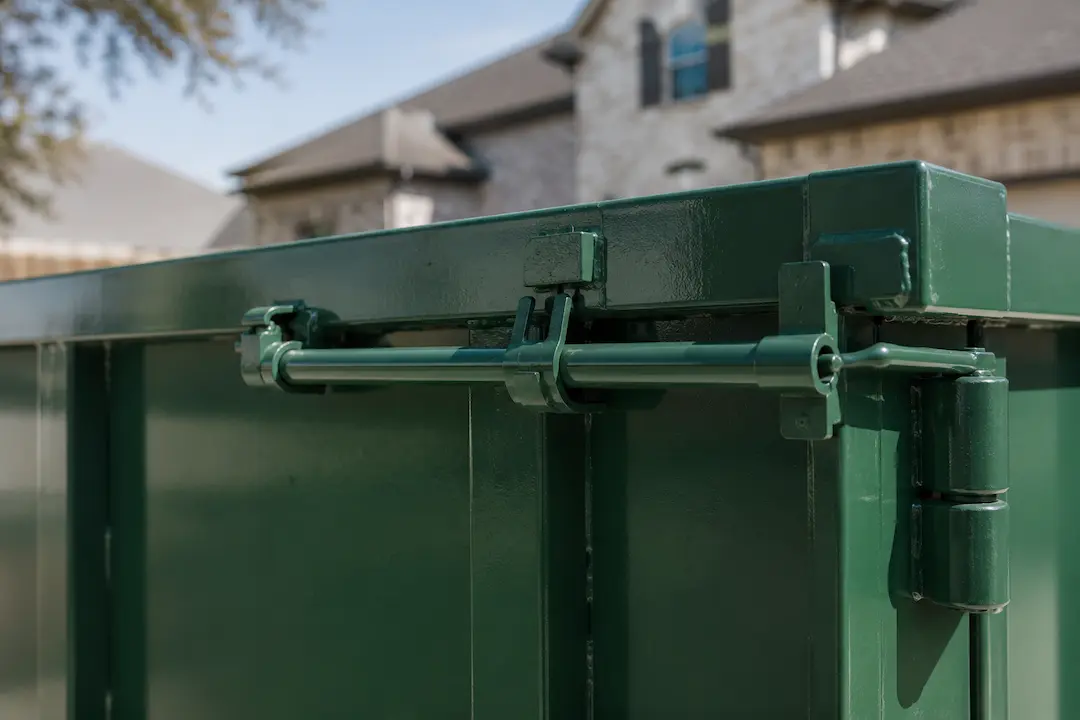
Yes. Most roll-off containers can be fitted with a lock bar that runs across the top opening, and it is one of the most effective deterrents available since it stops both walk-up dumping and anyone trying to pull items back out. If your project involves materials you would rather keep secure, or you are placing the container somewhere you cannot easily monitor, ask your provider about lock bar availability when you book.
Locking works best on roll-off dumpster rentals that sit on private property, since a lock does nothing if the container is sitting in a public right-of-way where anyone technically has access. Combine the lock with the placement habits above, behind a fence, close to your project timeline, not sitting empty for days, and you will keep people from dumping in your rented dumpster in the vast majority of cases.
What a Stranger’s Banned Item Can Cost You
When someone else adds material to your rented dumpster, you have no control over what went in. That matters more than it sounds, because a rental typically comes with a defined weight allowance, and a stranger’s construction debris, wet material, or bulky furniture can push a load closer to that limit without you knowing it happened. It is worth understanding the weight allowance built into roll-off dumpster rental pricing before you rent, so you know roughly how much cushion you have if unauthorized dumping does occur.
There is also a category of items that should never end up in a roll-off container at all, tires, paint, batteries, electronics, and other hazardous materials chief among them. A stranger adding one of these to your load is not just inconvenient, it can flag the entire container at the disposal facility and delay your pickup while it gets sorted out. Appliances with refrigerants and large electronics carry their own handling rules, and a container that gets flagged for one of these items often needs a second look before it can be hauled at all, which can push your timeline back at exactly the wrong moment on a job site. If you notice anything that clearly is not yours and does not belong in general debris, it is worth pulling it out and photographing it before your scheduled haul. A quick photo and a text to your hauler are the two tips worth remembering if you ever suspect someone else added to your load.
None of this is unique to Dallas, but a dumpster rental here tends to fill faster than renters expect once neighborhood waste gets added on top of your own. A little prevention goes a long way: keeping your dumpster rental covered and enclosed does more to prevent unwanted waste than almost anything else on this list, and it is far easier than sorting hazardous trash out of a load after the fact or arranging special disposal for something you never bought. If you are ever unsure whether something belongs in general waste or needs separate disposal, it is worth asking your provider before it becomes part of your load instead of after.
What to Do If Someone Is Already Dumping in Your Dumpster
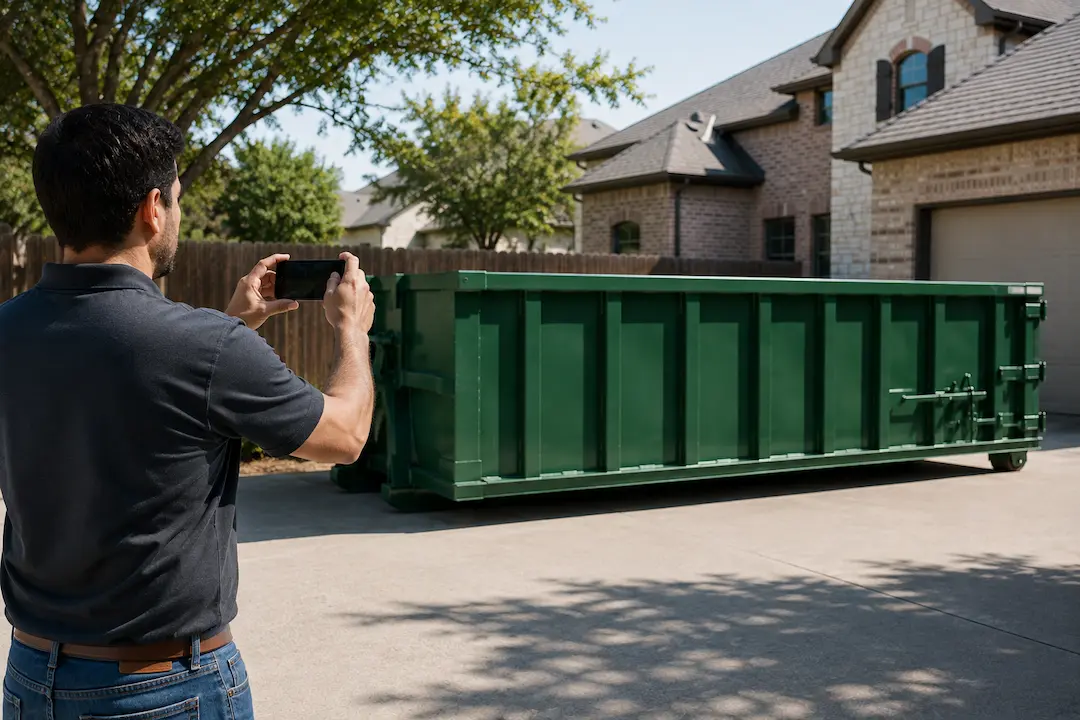
If you catch it happening, or you show up to find material you did not put there, start with documentation. Photograph the added items, note the date and approximate time, and check whether it looks like a one-time addition or an ongoing pattern. That record matters if you need to involve your hauler or the city.
From there:
- Call your hauler. If the container is close to its weight allowance because of someone else’s material, your provider needs to know before pickup, not after.
- Add or reposition a lock bar if the pattern repeats, especially overnight.
- Move the container further from the street or behind a barrier if the current spot is clearly too accessible.
- Report it to the city if it continues. If dumping is actively happening in front of you, call 911. For anything already dumped, file a report through Dallas 311, by phone, the Dallas 311 app, or online. Once you have a service request number, the city’s Code Compliance Illegal Dumping hotline can give you a status update on your specific case.
Dallas sees this often enough that the city treats it as an ongoing problem, not an isolated one. Illegal dumpers tend to target the same easy property again and again once they find one that works, which is exactly why documenting even a single incident matters: it helps prevent a repeat visit to your dumpster and to the dumpsters your neighbors manage nearby. Filing a report matters even for what looks like a small, isolated incident, since a pattern of illegal activity is usually what gets a location flagged for closer attention, and an early report is often the difference between one illegal drop-off and a location that keeps attracting illegal dumping every few weeks, the same way unlocked dumpsters keep attracting it block after block.
For businesses running a container that fills on a predictable schedule rather than a one-time project, switching to a locked, serviced commercial trash pickup container often solves the problem entirely, since regular servicing means the container is rarely sitting empty and unattended long enough to attract unauthorized use.
Is It Illegal to Put Trash in Someone Else’s Dumpster in Dallas?
Yes. Dumping waste at a location that is not an approved disposal site, including in a dumpster you do not own or have permission to use, is a criminal offense in Texas under Health and Safety Code Section 365.012, part of the Texas Litter Abatement Act. In plain terms, this makes it illegal to dump waste, including construction debris or household trash, into a dumpster that belongs to someone else. The statute specifically covers unauthorized disposal in a dumpster or similar container, not just open dumping on land or roadside. The exact charge scales with how much waste is involved, ranging from a lower-level misdemeanor up to a state jail felony for large-volume or repeat offenses, but the underlying rule is the same regardless of scale: adding waste to a dumpster that is not yours, without permission, is against the law. If you are dealing with a repeat offender rather than a one-off, documenting the pattern gives you something concrete to hand to the city or, if needed, your property manager or homeowners association.
Reporting Helps Prevent Illegal Activity
It does not matter whether the person doing it thinks of it as a big deal. Texas law does not require proof of intent for the lower-level offense levels, so “I did not think it was illegal” is not a defense that holds up. The statute applies the same way whether the dumpster sits outside a single-family home, a small business, or a multi-phase commercial project, and it applies whether the waste is construction debris, household trash, or yard waste from someone else’s cleanup. Reporting a pattern of illegal activity, rather than a single illegal incident, is usually what prompts the city to take a closer look, which is another reason documentation matters as much as the report itself. None of this changes what a renter needs to do day to day: the legal backing mainly exists to support the practical steps, enclosures, signage, cameras, locks, and a covered dumpster, that prevent the problem from becoming a legal one in the first place.
Whether it gets labeled illegal dumping, an illegal disposal complaint, or just an illegal use of a container that is not yours, the underlying rule is the same everywhere in Texas: adding waste to someone else’s dumpster without permission is illegal, regardless of how small the load looks.
Quick Recap: How to Keep People From Dumping in Your Rented Dumpster
None of this requires special equipment or a big change to how you run your project. The renters who never deal with unauthorized dumping tend to do the same handful of things every time. They think about placement first, tucking the container behind a fence, gate, or far enough from the street that it is not the easiest thing a passerby sees. They avoid ordering too early, so the container is not sitting visibly empty for days before there is anything to put in it. They add a lock bar when the site cannot be watched, particularly overnight or on weekends. And on longer jobs, they lean on their hauler for regular swap-outs rather than letting one container sit static for weeks at a time.
If unauthorized dumping does happen despite all of that, the response is the same every time: document it, tell your hauler if it might affect the load, and escalate to the city if it becomes a pattern of illegal dumping rather than a one-off. Most Dallas renters only need to stop people from dumping in their dumpster once or twice over the life of a project, and a little planning up front is usually enough to keep it that way.
Following even a couple of these tips cuts down on unwanted additions significantly. These same tips scale across almost any kind of home projects, from a single weekend cleanout to a multi-phase commercial build with several dumpsters on site. Either way, enclosures and cameras work at every dumpster rental location, not just one, and the property stays easier to manage as a result. The yard or lot stays clearer, and the waste that ends up in the dumpster is actually yours.
Keep People From Dumping in Your Rented Dumpster: Dallas FAQs
- How do you keep people from putting trash in your rented dumpster?
- Place it behind a fence or gate rather than at the curb, order delivery close to when you actually need it so it does not sit empty, and consider a lock bar if the site cannot be monitored. A simple sign noting the container is private property helps too.
- How do you keep people out of your dumpster?
- Limit visibility and access from the street, lock the top opening when the site is unattended, and avoid letting the container sit empty for extended periods before your project starts.
- What do you do if someone is putting trash in your dumpster?
- Document what was added with photos and a timestamp, tell your hauler if it may affect the weight allowance, and if it keeps happening, file a report through Dallas 311 (or call 911 if it is happening right now) and consider adding a lock bar or repositioning the container.
- Is it illegal to put trash in someone else’s dumpster?
- Yes. In Texas, it is a criminal offense under Health and Safety Code Section 365.012, which specifically covers unauthorized disposal in a dumpster or similar container. The charge scales with the amount of waste involved.
- Can you lock a roll-off dumpster?
- Yes, most roll-off containers accept a lock bar across the top opening. It is one of the more effective ways to stop unauthorized dumping, particularly on private property where you control access.
Placing or Servicing a Dallas Roll-Off Dumpster?
Frontier Waste Solutions delivers, positions, and services roll-off containers throughout the Dallas area, and our team can talk through placement and locking options before your container ever arrives.
Request a Quote | (888) 854-2905
2323 Bryan St, Suite 2620, Dallas, TX 75201
(888) 854-2905