Drafting a comprehensive office waste management policy often makes people’s eyes glaze over. It sounds like one of those dusty binders that sits on a shelf forever, filed away and forgotten after the initial email blast. But here’s the real truth, it’s not about some vague “going green” initiative or feel-good corporate messaging. It’s a practical business tool, a genuine instrument of management. It cuts overhead, makes the office run smoother, and honestly, keeps you out of trouble. This is about how the entire organization manages its costs and efficiency.
But a policy without a real plan? That’s just paper. It’s a good intention that gets incinerated with the rest of the waste. Here’s what I’ve learned about making one that actually works, one that changes habits and saves real capital.
Why a Formal Waste Policy Drives Efficiency
Let’s be honest, the sustainability angle is nice, and it feels good to be environmentally responsible, but businesses still have businesses to run. I was skeptical too, until I saw the numbers. The true power of a formal office waste management policy lies in the bottom line, which affects the entire management structure. This is where a formal office waste management policy stops being a “nice-to-have” and starts becoming a real efficiency booster. It is foundational to sound resource management.
- It creates real cost savings: This benefit is often underestimated. The cost of hauling mixed waste to a landfill is exponentially higher than having a dedicated recycling stream picked up, sometimes by a factor of three or four. A good policy points out exactly where you’re overspending on waste and shows opportunities, like recycling, to reduce landfill fees. When you quantify that saving, suddenly the policy isn’t about saving trees; it’s about freeing up budget for new hires or equipment. This financial discipline is the core mandate of good management.
- It ensures legal compliance: Regulatory agencies, especially in larger metropolitan areas, are tightening disposal regulations every year. You stay ahead of local and state regulations for proper disposal and recycling. Failing to comply with these rules doesn’t just mean a slap on the wrist; it can mean heavy fines and damaging, public legal action. A clear, documented waste management policy is your insurance against this financial and reputational risk, saving countless hours of legal team time and scrutiny. (See the EPA’s guide on managing commercial waste for federal standards).
- It streamlines operations: Chaos is inefficient. No more guesswork. Employees and custodial staff know what goes where, which keeps the workplace tidy and more efficient. Time spent arguing over which bin is for compost or cleaning up messy spills in the recycling area is time taken away from productive work. When there is clarity on waste streams, the cleaning teams can work faster, reducing the time spent sorting or dealing with contaminated materials. This formal approach also supports any existing recycling program. The less time anyone spends thinking about trash, the more time they spend on their core jobs.
- It boosts your brand: This is the external payoff. A strong sustainability policy is now a marker of good corporate citizenship. It shows clients, partners, and new hires that your company is responsible and intentional. This sends a positive environmental signal that attracts top talent and socially conscious customers who are often willing to pay a premium to work with a responsible organization. This improves your public standing, which is invaluable in today’s market.
The First Step: Start with a Waste Assessment
You can’t just sit down and start writing rules because your assumptions about your output are almost certainly wrong. I nearly did, and it would’ve been a mess. I would have mandated a better paper recycling program only to find that our biggest problem was food waste. You need a verifiable baseline. Don’t guess. Actually look at what you’re tossing out. The process of physically conducting a waste assessment is the only way to guarantee accurate figures. You must turn the physical pile of trash into quantifiable figures.
The process of physically conducting a waste assessment is the only way to guarantee accurate figures. You must turn the physical pile of trash into quantifiable figures. This is the essential precursor to any meaningful waste reduction. The audit is where you stop managing assumptions and start managing facts. This is where the “aha” moments happen. I remember one audit where almost half of what we thought was “trash” was actually pristine cardboard. Not trash, a resource. We were literally paying hundreds of dollars a month to bury a commodity we could have gotten rid of for free, or even sold. That kind of insight makes your goals realistic. It’s your “before” photo, and it’s how you’ll prove the whole thing worked when you calculate the return on investment (ROI). The necessary discomfort of the physical audit is justified by the clarity it provides on potential savings.
Need baseline data? Frontier Waste Solutions offers full waste audits and comprehensive services to give you exactly the insights your workplace needs. We remove the guesswork and provide the facts you need for effective management.
Get Your Free Waste Audit Consultation
7 Essentials for Your Office Policy
Now that you have your data (or you’re about to get it), you can write a document that actually matters. This is where the tactical meets the strategic. Here is the checklist to ensure your office waste management policy is actionable.
1. Purpose & Scope
This may seem basic, but clarity prevents confusion and liability down the road. You must be crystal clear on what the policy covers and who is responsible for its success. Keep this part simple:
- State the goal (“This policy’s goal is to reduce waste, lower costs, and ensure compliance”). The mission statement should be concise and easily understood by every employee, from the intern to the CEO.
- Define who it applies to (employees, contractors, tenants). Are vendor partners or food service providers included? Be specific. Failure to include contractors who generate significant waste is a common policy loophole, undermining the entire waste management effort.
- Clarify what areas it covers (office, breakrooms, copy rooms). You must delineate between public and private waste areas.
2. Clear Goals & Measurable Objectives
This is where the audit pays off. Your goals must be measurable. They must be tied directly to the baseline data you collected and designed to reduce high-volume waste streams.
- Bad goal: “We will recycle more.” (Impossible to track, easy to forget). This is an aspiration, not a metric.
- Good goal: “Reduce landfill waste by 30% within 12 months.” (A clear, quantifiable metric tied directly to disposal costs and savings).
- Good goal: “Achieve a 90% diversion rate for cardboard and aluminum by Q4.” (Specific to high-volume streams, sets a clear performance metric for management to track).
3. Waste Stream Definitions (Including Organic Waste)
This is the practical “how-to.” Clear, simple, and impossible to misinterpret. This section fights contamination, the single greatest enemy of recycling. Contamination happens when one non-recyclable item ruins an entire batch of valuable materials.
- Landfill (Trash): Items that truly can’t be recycled, like non-recyclable wrappers or Styrofoam. Be specific about what cannot be included (e.g., ceramics, light bulbs, heavily contaminated paper).
- Mixed Recycling: Plastics #1–5, paper, aluminum, and other commonly accepted materials. Highlight the non-negotiables: clean and dry. One greasy pizza box can ruin an entire bin of valuable paper. Even a small dollop of yogurt in a container can sabotage the recycling process for hundreds of pounds of materials.
- Cardboard: Must be clean, flattened, and broken down. A single greasy pizza box can ruin an entire bin of valuable paper.
- Organics/Compost: Food scraps, coffee grounds, and other organics. This is crucial for high-volume cafeterias and breakrooms to capture waste that would otherwise generate methane in a landfill.
- Specialty Waste: E-waste, batteries, light bulbs, and toner cartridges. Define the drop-off location and the person responsible for handling their disposal.
- Tip: Use clear visual guides from resources like Recycle Across America so no one has to guess.
4. Roles & Responsibilities
Accountability drives action. You need a clear chain of command for waste management. The job of every team member changes under this policy.
- Management: Approves the policy and budget. They must champion the program publicly. Their visible commitment is crucial for employee adherence.
- “Green Team” or Coordinator: Handles training, oversight, and tracking. This is where the day-to-day management of the program lives, involving regular spot-checks and contamination monitoring.
- All Employees: Follow the procedures. Their primary responsibility is source separation, getting the materials into the right bin.
- Custodial Staff: Collect waste properly and prevent contamination. Their job changes from sorting trash to monitoring streams and reporting contamination to management. They are the front-line auditors.
5. Procurement & “Source Reduction” Guidelines
This is the secret efficiency weapon. The ultimate goal of waste reduction is ensuring the best waste is the waste you never create. This is where strategy trumps reaction, by minimizing input materials.
- Guidelines for purchasing preference for low-packaging products. If the packaging isn’t there, you don’t have to pay to dispose of it.
- Reusable kitchen supplies. Ban single-use paper plates and plastic cutlery in the breakroom. This single change can drastically reduce kitchen waste.
- “Green” vendor options. Seek out vendors that commit to taking back packaging or using reusable containers for deliveries.
6. Training & Communication Plan
A policy is useless if no one knows it exists. The communication plan is the management tool that ensures the policy leaves the binder and enters the culture. It must be ongoing and iterative.
- Host an all-hands launch meeting. Make it fun, provide food, and secure commitment from leadership. The message: “This saves us money, which is good for all of us.”
- Place clear signage at every bin. Use visuals. Make it impossible to misuse the system. The signs should feature pictures of acceptable and unacceptable items.
- Include the policy in onboarding for new hires. This embeds the culture from day one, setting clear expectations for new employees.
7. Measurement & Review
You can’t improve what you don’t measure. This is how you prove the ROI and justify the resources spent on the program. The audit process must become cyclical.
- Conduct a follow-up audit in 6–12 months. This comparison shows exactly how much waste and money you have saved against the baseline, justifying the whole effort.
- Review and update the policy every year. The waste streams change as the business evolves (e.g., shifts to remote work, changes in cafeteria service). The policy must evolve with them.
A Policy on Paper Is Useless: Focus on Recycling Bins & Culture
I’ve seen it happen over and over. A company drafts a beautiful 10-page policy, emails it to everyone, and then… nothing. Because a policy sitting in someone’s inbox doesn’t change behavior. Success is 80% logistics and 20% commitment.
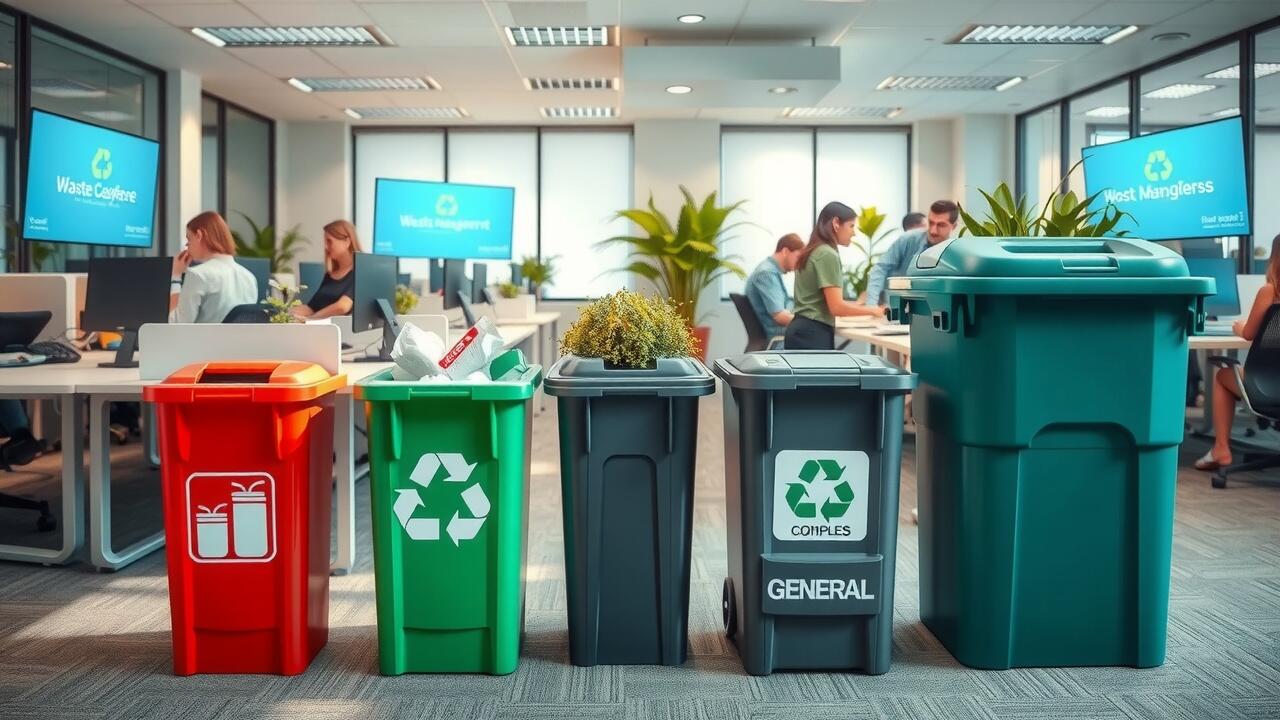
Success comes from Clear Infrastructure. You can’t ask people to compost without giving them a compost bin. Standardized recycling bins and signage matter immensely. They must be the same color, the same size, and located in the same spot across every floor. It also requires Consistent Communication. Keep it visual and easy. One confusing bin placed in a corner is guaranteed failure because it introduces doubt into the system, and that doubt breeds contamination. The logistics must be flawless—the recycling bin must never be full when the trash bin is empty.
Let Frontier Be Your Waste Policy Partner
A policy is the map—but the map won’t drive the car. Implementation is where the real impact happens. It’s not just about hauling trash. It’s about designing the whole system, from procurement to final disposal. We provide the management solutions that bridge the gap between paper policy and cultural reality.
- From the audit to the right bins and eliminating unnecessary costs, we make the entire setup truly efficient. We provide the logistical and contractual support you need, allowing your team to focus on their core competencies. Ready to turn your policy into a cost-saving reality?
Get My Free Waste Management Consultation
Explore Our Commercial Waste Services