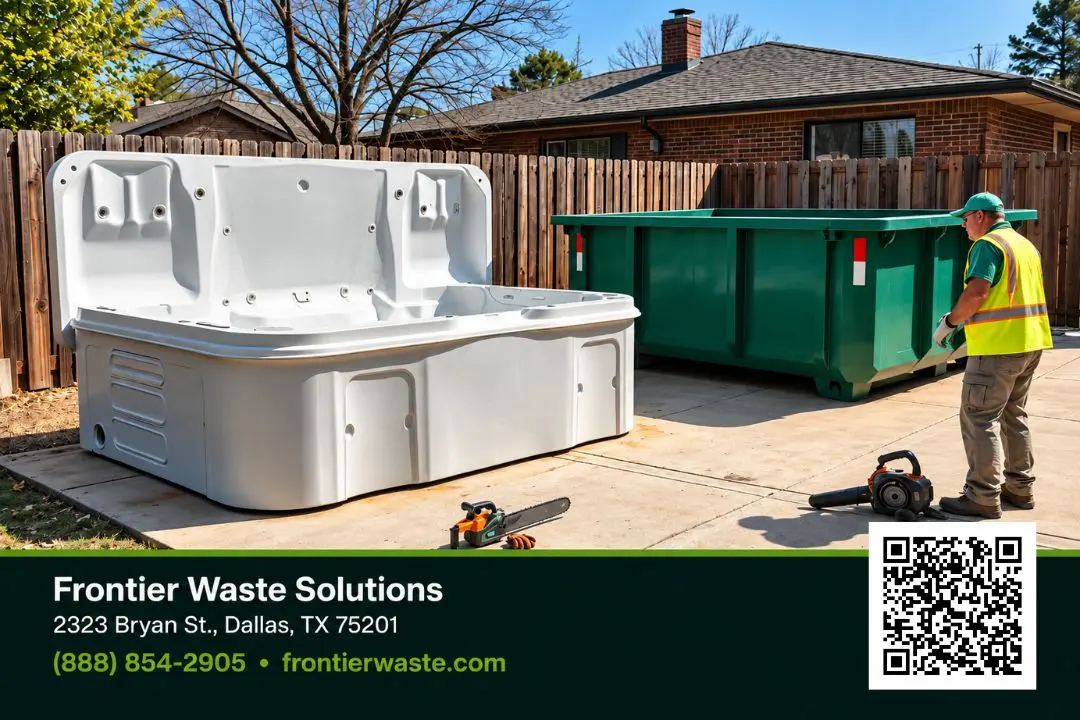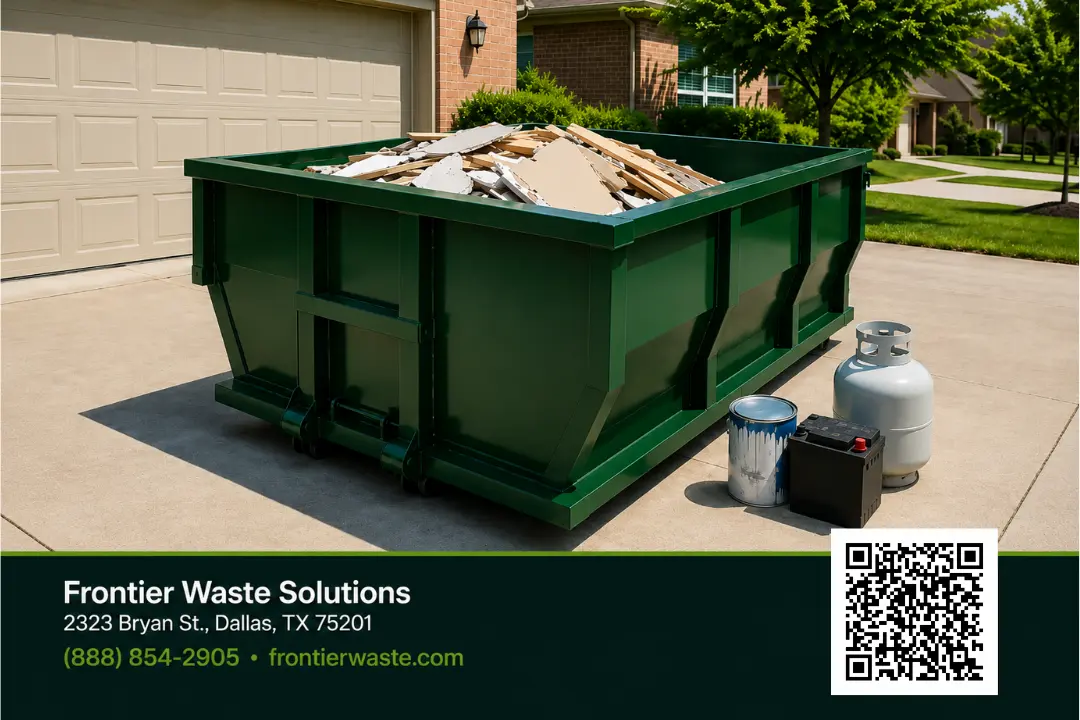
A roll-off dumpster will swallow an astonishing amount of debris, which is exactly why people assume almost anything can go in it. For most of a project, that’s true — drywall, lumber, old furniture, flooring, and general junk are no problem at all. But every roll-off has a short list of materials that aren’t allowed, plus a second list of items that come with restrictions or extra handling.
Putting the wrong thing in the box is one of the most common mistakes we see around Dallas, and it can lead to a rejected load, a contamination fee, or a delay on pickup day. The good news is that the off-limits list is short and predictable once you know the logic behind it. Here’s how we walk Dallas customers through what stays out of the dumpster — and where those items should go instead.
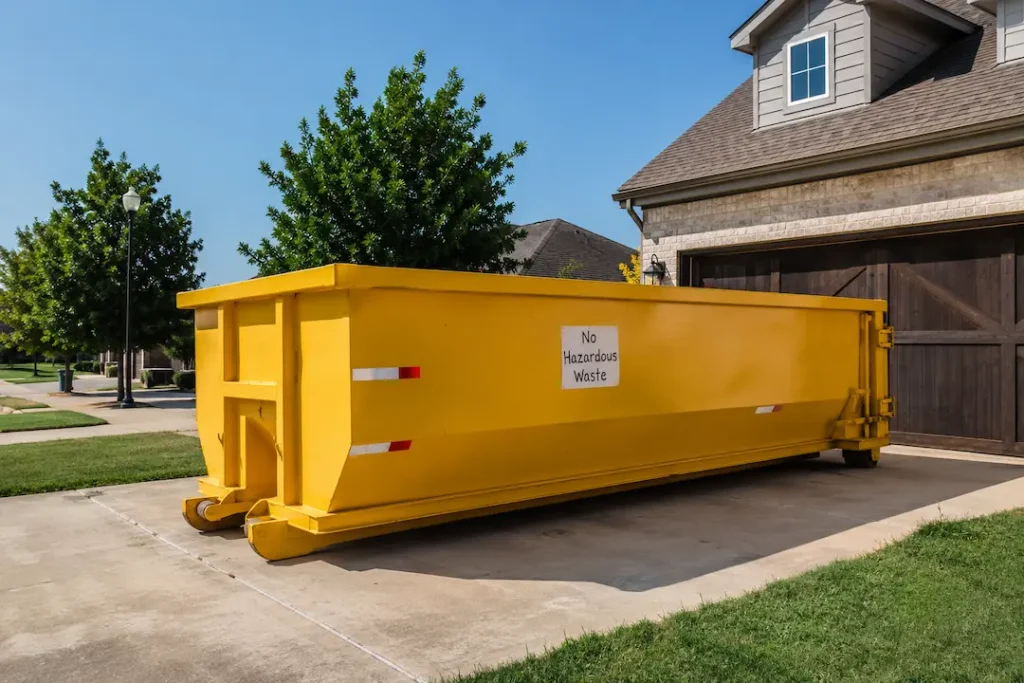
Before you dig in — related reading
- A full overview of how our roll-off dumpster rentals work, for temporary project and cleanout containers.
- How we handle roll-off dumpster rental throughout Dallas, including delivery and placement.
- Help choosing the right roll-off dumpster size for the volume of debris you expect.
- For steady business waste instead of a one-time haul, regular commercial trash pickup for ongoing waste.
What are you not allowed to put in a roll-off dumpster?
The clearest way to think about it is by category. Almost everything that’s banned falls into one of three buckets.
The first is hazardous and flammable material: paint and stains that aren’t dried out, solvents, gasoline, motor oil, antifreeze, pool chemicals, pesticides, household cleaners, and anything pressurized or combustible — propane and other compressed-gas tanks, fireworks, and hot coals, since even one still-hot coal can start a fire inside the container. The second is regulated electronics and batteries: computers, monitors, televisions, and rechargeable or vehicle batteries. Lithium batteries deserve special mention here — they’re common in e-bikes, power tools, cell phones, and laptops, and they’re a genuine fire risk if crushed in a load, not just a recycling-rule technicality. The third is specialty waste: tires, asbestos, medical waste, and large appliances that contain refrigerant.
General construction debris, household junk, furniture, yard waste, and most renovation material are all fine — it’s this short specialty list that has to stay out.
Why can’t you throw these items in a dumpster?
None of these rules are arbitrary. The bans exist for three practical reasons.
Safety comes first: flammable liquids, pressurized tanks, fireworks, and reactive chemicals are a fire and explosion risk in the container, on the truck, and at the transfer station — this isn’t theoretical, it’s one of the most common causes of waste-truck and container fires in the industry. Environmental law is second: paint, oil, electronics, and batteries leach heavy metals and chemicals into soil and groundwater, so federal and Texas regulations keep them out of ordinary landfills. Cost is third: a landfill can reject or fine a load that contains banned material, and that cost flows back to whoever filled the box.
When a hauler says a material is prohibited, it’s almost always because the landfill won’t legally accept it — the dumpster is just the first checkpoint.
Can you put paint, chemicals, or other hazardous waste in a dumpster?
No. Liquid paint, solvents, automotive fluids, gasoline, pesticides, pool chemicals, and household chemicals are classified as household hazardous waste and can’t go in a roll-off. The same goes for propane, helium, and oxygen tanks of any size, and for fireworks — all genuine fire risks rather than just a paperwork issue.
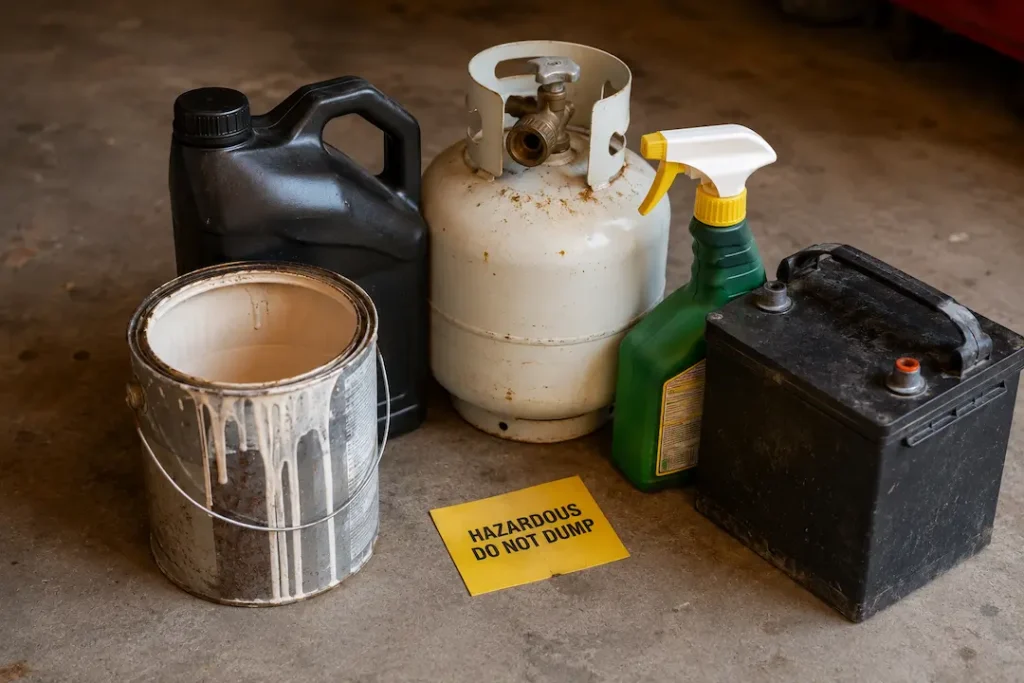
The good news is that Dallas and the wider DFW area have proper channels for them. Dallas County operates the Dallas County Home Chemical Collection Center, a free drop-off service for residents of Dallas and surrounding cities, and it’s the right destination for paint, chemicals, and automotive fluids — bring proof of residence when you go.
One common workaround for latex paint specifically is to dry it out completely (with a hardener or kitty litter, or just by leaving the lid off for a few days in the Texas heat) so the empty, solidified can is no longer a liquid. Texas doesn’t classify fully hardened latex paint as hazardous waste, so once it’s solid all the way through, it’s generally fine to dispose of with regular trash — no special trip required. Oil-based paint is different: it’s always treated as a household hazardous chemical and should go to the collection center rather than the dumpster or the curb. For the full breakdown, see our guide to disposing of paint in the DFW area.
Can you put appliances, electronics, or batteries in a roll-off dumpster?
This one trips people up because the answer depends on the item. Plain metal appliances without refrigerant — a clothes dryer, a stove, a water heater — can often go in a roll-off, though they may be handled as scrap metal. Appliances that contain refrigerant, like refrigerators, freezers, window air conditioners, and dehumidifiers, are different: the refrigerant has to be professionally recovered and the unit tagged before it can be scrapped, so these generally can’t just be thrown in the box.
Electronics are kept out by recycling rules in most cases — televisions, monitors, and computers should go to an electronics recycler rather than the landfill. Batteries follow the same logic, with one extra wrinkle: car batteries and rechargeable lithium or NiCad batteries are recycled separately, and lithium batteries in particular — the kind found in e-bikes, power tools, cell phones, and laptops — are a real fire hazard if crushed in a load, not just a disposal-rule issue. Dallas and DFW have e-waste drop-offs and retailers that take old electronics and batteries, which is where these belong.
Can you put tires, mattresses, or other restricted items in a dumpster?
Beyond the hard “no” list, there’s a gray zone of restricted items that are sometimes accepted but handled differently. Tires are the classic example — most landfills won’t take whole tires mixed into a regular load, so they usually go to a tire recycler or are accepted only with special arrangement. Mattresses and box springs are often allowed but may carry an added fee because they’re bulky and awkward to process. Large amounts of concrete, dirt, or brick are fine but should be discussed up front because of weight limits.
The rule of thumb: if an item feels unusual, ask before you load it. A two-minute phone call is cheaper than a contamination fee or a load the truck can’t take.
What happens if you put prohibited items in a dumpster in Dallas?
There are a few possible outcomes, none of them convenient. The most common is a contamination or sorting fee — if banned material turns up in the load, someone has to pull it out and route it properly, and that labor and disposal cost is charged back. In other cases, the landfill can reject the entire load over one prohibited item, which means the debris comes back or has to be re-sorted before it can be dumped. With genuinely hazardous material, like a leaking chemical container or a propane tank, pickup can be delayed until the item is removed, because the driver can’t safely haul it.
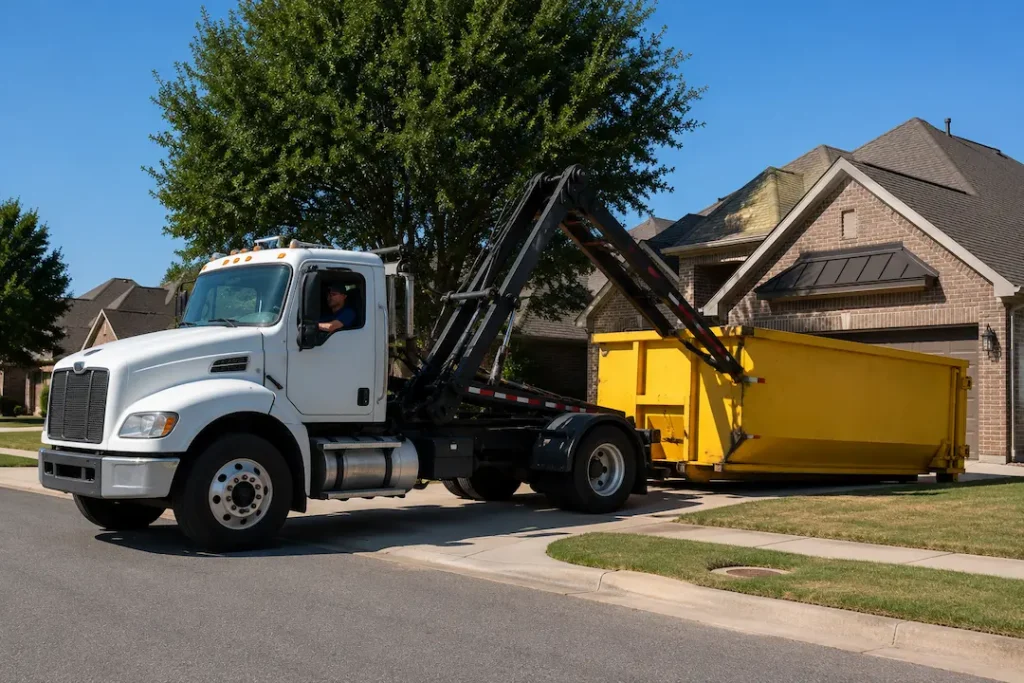
The simplest way to avoid all of this is to keep the off-limits items out from the start and set them aside for the proper Dallas drop-off. Tell us what’s going in the box up front and we can flag anything that needs to go elsewhere before it becomes a problem on pickup day.
Where Dallas wants the banned items to go instead
The paint, solvents, automotive fluids, batteries, and pool chemicals that can’t ride in the box do have a local home: Dallas County’s Home Chemical Collection Center at 11234 Plano Road, just north of I-635, accepts household hazardous materials at no charge for residents of participating cities (bring a photo ID and a utility bill showing your address). A quick drop-off run is far cheaper than the contamination fee a hauler bills when banned material turns up in the load.
Still not sure what’s allowed in the box?
Can I put a small amount of paint in the dumpster if the can is almost empty?
Wet paint isn’t allowed even in small amounts. Latex paint can be dried out completely with a hardener or kitty litter until it’s solid — fully hardened latex isn’t classified as hazardous waste in Texas — but confirm with us first. Oil-based paint and solvents should always go to a household hazardous waste facility.
Why can’t appliances like refrigerators just go in the box?
Refrigerators, freezers, and air conditioners contain refrigerant that must be professionally recovered before disposal under environmental rules. Plain metal appliances without refrigerant are usually easier to handle, but the units with cooling systems need separate processing.
Where do prohibited items go instead in Dallas?
Household hazardous waste — paint, chemicals, automotive fluids — goes to the Dallas County Home Chemical Collection Center; electronics and batteries go to e-waste recyclers and participating retailers; tires go to tire recyclers. We’re glad to point you toward the right channel for what you’re getting rid of.
What if I’m not sure whether something is allowed?
Set it aside and ask before it goes in the dumpster. It takes one quick call, and it’s far cheaper than a contamination fee or a rejected load. We’d rather answer the question up front than sort it out on pickup day.
Talk to Frontier Waste Solutions About Your Dallas Roll-Off Rental
If you have a project coming up and you’re not sure what can go in the box, that’s exactly the conversation worth having before you book. Tell us what you’re clearing out and we’ll let you know what the roll-off can take, what needs a separate Dallas drop-off, and what size container fits the job — so nothing slows you down on pickup day.
Frontier Waste Solutions
2323 Bryan St, Dallas, TX 75201
Phone: (888) 854-2905