Trying to figure out whether you need a trash compactor or dumpster? Dallas business owners ask this constantly, and the honest answer comes down almost entirely to how much waste you generate each week. Short answer: most Dallas businesses do fine with a right-sized dumpster on a recurring pickup schedule. A compactor only starts to make sense once you’re consistently generating large volumes of trash every week — think grocery stores, large multifamily properties, distribution centers, or restaurants pushing serious wet waste. If that’s not you yet, a dumpster is almost always the simpler, cheaper call. Below is how to tell which one — trash compactor or dumpster — actually fits your Dallas operation, without guessing.
What Is a Commercial Trash Compactor, and How Does It Work?
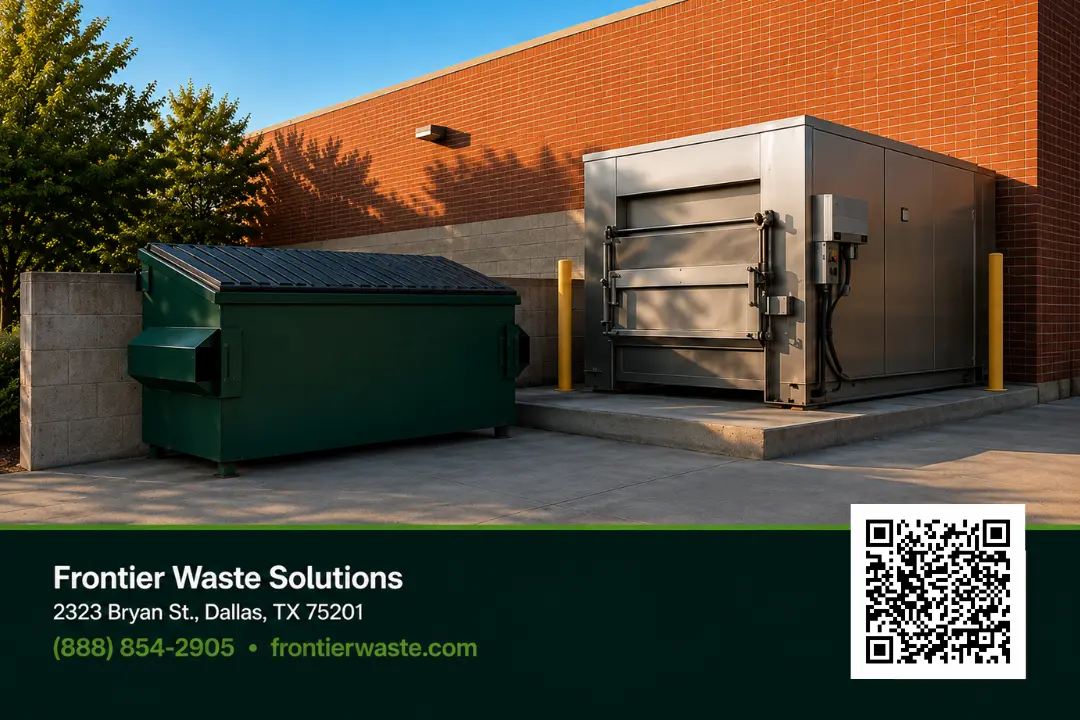
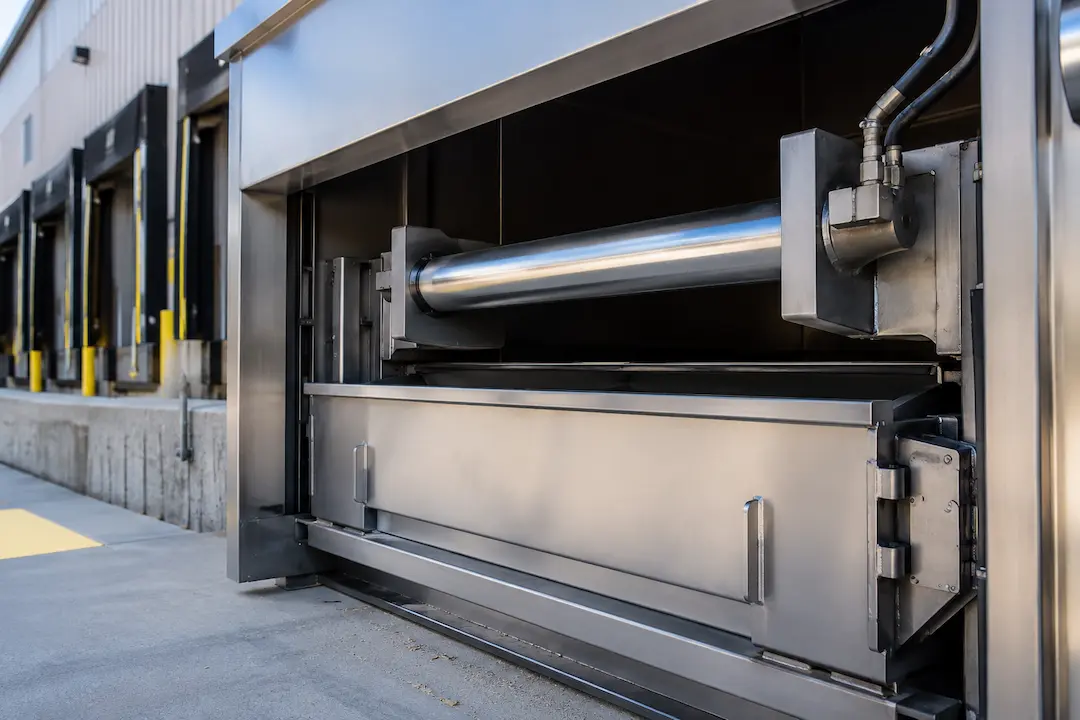
A commercial trash compactor is a self-contained piece of equipment that crushes waste inside a sealed steel chamber before it’s hauled away. Instead of loose trash piling up in an open container, a hydraulic ram presses it down, so what would fill several dumpsters gets packed into a fraction of the space.
Compactors are typically fed either by hand (staff toss bags or bins directly in) or by tipping a front-load container into a hopper. Once the unit is full, a hauler comes out, disconnects the compactor’s sealed container, and hauls the compacted load to disposal — then drops an empty container back in place. The compaction mechanism itself usually stays on-site; it’s the container that gets swapped.
Because everything is enclosed, compactors also help control odor, pests, and liquid runoff — which is part of why they’re common at restaurants, grocery stores, and apartment communities even before volume alone would justify one.
When Does a Dallas Business Actually Need a Compactor Instead of a Dumpster?
As a general rule of thumb across the waste industry, businesses start looking seriously at compactors once they’re generating somewhere in the neighborhood of 30 cubic yards of waste or more per week. That’s not a hard cutoff — it’s a signal to start the conversation, not a law of physics — but it’s a useful gut check.
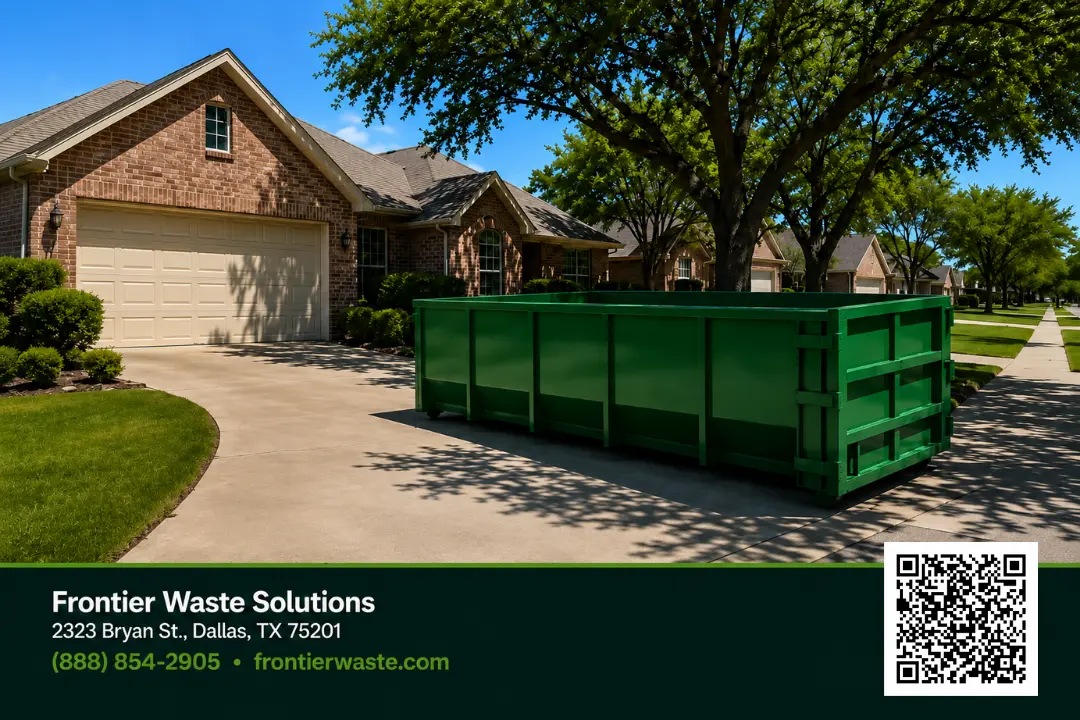
Below that volume, the economics usually favor a dumpster: lower equipment cost, no maintenance obligation, and sizing flexibility (you can move from a 4-yard to a 6-yard container as your business grows without a capital investment). Above it, a compactor starts paying for itself through fewer hauls and lower per-ton disposal costs.
A few practical signals that it’s worth getting a compactor quote:
- You’re paying for 3+ dumpster pickups a week and still running out of room between them
- You’re a grocery store, distribution center, manufacturing facility, or large apartment community with consistently high volume
- Overflow, odor, or pest complaints are becoming a recurring problem with your current container
- You have the space and a hard, level pad for a compactor and its container — these aren’t small footprints
If none of that describes your business, don’t let a hauler upsell you into equipment you don’t need yet. Most small and mid-size operations are genuinely better served by a properly sized dumpster.
What Types of Commercial Compactors Are There?
Compactor is a category, not a single product. The right type depends on your waste stream and how much space you have.
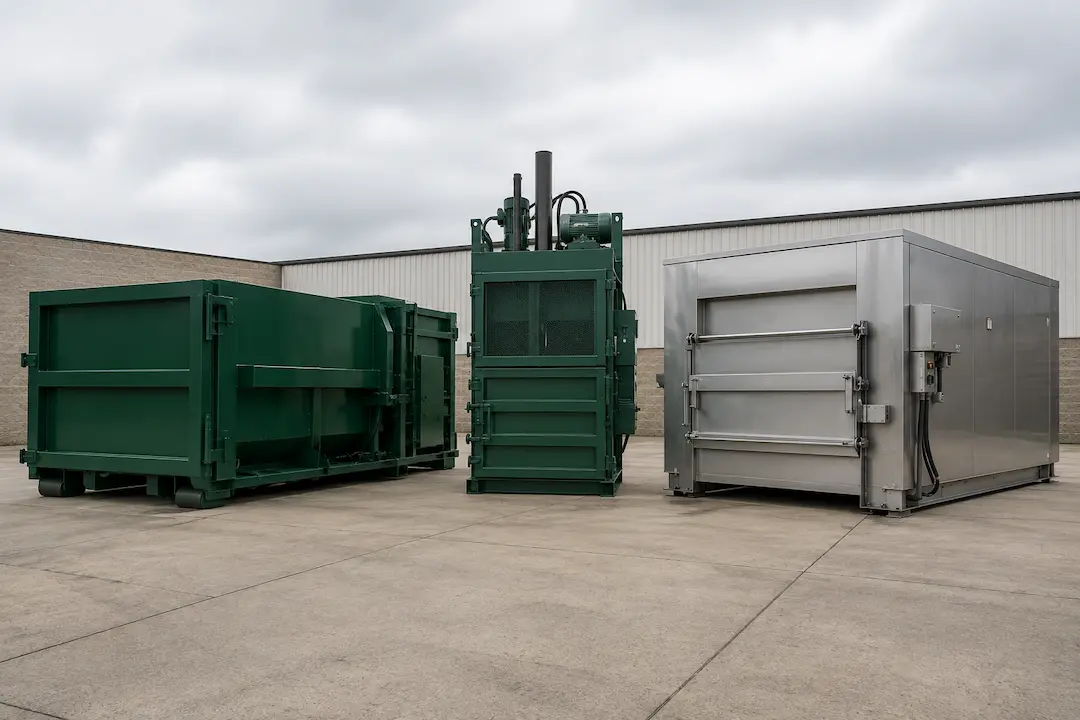
- Self-contained compactors: fully enclosed units built for wet or odorous waste — restaurants, grocery stores, and food service operations use these most often, since the sealed design prevents liquid leakage during transport.
- Stationary compactors: pair a fixed compaction unit with a detachable, open-top container. They’re common for dry waste — cardboard, packaging, general office or retail trash — where liquid containment isn’t the main concern.
- Vertical compactors: smaller, space-efficient units that compress waste downward into a wheeled or fixed container. These fit well in tighter urban footprints — strip malls, smaller retail spaces, office buildings — where a full-size stationary unit won’t fit.
- Apartment-chute compactors: built into multifamily properties, usually at the base of a trash chute system, compacting waste from multiple floors into a single container. Property managers use these to cut down on the number of dumpsters (and pickups) a large community would otherwise need.
Compactor vs. Dumpster in Dallas: How the Costs Compare
There’s no single number that applies to every business, but the general cost pattern for a trash compactor or dumpster looks like this:
Dumpsters have low or no equipment cost — you’re typically paying a flat rental and hauling fee — but you pay per pickup, and pickups scale directly with how much waste you generate. More volume means more trips, and more trips means a higher monthly bill.
Compactors usually involve either a lease/rental fee for the equipment itself or a purchase, plus installation. In exchange, each haul moves far more waste per trip — industry figures commonly cite compaction ratios in the 3:1 to 5:1 range depending on the waste type — which means fewer total pickups and often a lower cost per ton hauled once volume is high enough.
The break-even point depends on your local hauling rates, disposal fees, and how consistent your volume is. That’s a conversation worth having with a specialist rather than estimating blind — [Emil to confirm Frontier’s current compactor options and pricing before this section goes live].
What Are the Real Benefits of Compacting Your Waste?
Beyond the cost math, choosing the right trash compactor or dumpster solves some operational headaches a mismatched setup can’t:
- Fewer pickups — less truck traffic on your property, fewer scheduling headaches
- Space efficiency — a compacted load takes up a fraction of the footprint of loose trash
- Better containment — sealed units cut down on odor, pests, and litter blowing around the lot
- Cleaner curb appeal — no overflowing bins visible to customers or tenants
- Potential disposal savings at scale — lower cost per ton once volume justifies the equipment
The tradeoff is upfront cost, a maintenance relationship with whoever owns the equipment, and a permanent space commitment. For high-volume operations, that tradeoff is usually worth it. For everyone else, it’s overkill.
Quick FAQ
- Should I rent or buy a compactor?
- Most businesses rent or lease rather than buy outright, since the hauler or a compactor company typically handles maintenance and repairs as part of the agreement. Buying only tends to make sense for very high-volume, long-term operations with the staff to manage upkeep in-house.
- Do restaurants and other wet-waste businesses need compactors?
- Not automatically — it comes back to volume. A smaller restaurant may still be well served by a dumpster with a tighter pickup schedule. Higher-volume kitchens dealing with heavy food waste are where self-contained compactors, built specifically to handle liquid and odor, tend to make the most sense.
- How often does a compactor get emptied?
- It depends entirely on your volume and the container size paired with the unit — anywhere from a couple of times a week to roughly every other week for lower-volume users. A hauler can help set a schedule based on how fast a specific compactor fills.
- Is a compactor always cheaper than a dumpster?
- No. It’s cheaper on a per-ton basis once volume is high enough to justify the equipment. Below that threshold, the fixed cost of the compactor outweighs the savings on hauling, and a dumpster stays the more economical option.
- What safety and OSHA considerations apply to compactors?
- Compactors involve hydraulic rams and moving parts, so staff training on safe operation, lockout procedures, and keeping the loading area clear is essential. Employers should follow OSHA guidance on compactor and baler safety and make sure only trained employees operate the unit.
Get the Right Compactor or Dumpster Setup for Your Dallas Business
Still not sure whether you need a trash compactor or dumpster? Frontier Waste Solutions can size and schedule your waste service to match your actual volume — not just a rule of thumb.
Request a Quote | (888) 854-2905
2323 Bryan St, Suite 2620, Dallas, TX 75201
(888) 854-2905