Whether you’re opening a restaurant on Lower Greenville, fitting out an office in the Arts District, or taking over a strip-center retail space in Oak Cliff, one of the less glamorous items on your move-in checklist is getting the trash handled. Commercial trash service works differently from the residential cart you might be used to at home, and the setup steps catch a lot of new business owners off guard.
The good news is that the process is more straightforward than it sounds once you know what to expect. This guide walks through what commercial waste service actually is, what the City of Dallas does and doesn’t cover, and how to get a dumpster on a regular pickup schedule for your business — before your opening day, not after.
Before you dig in — related reading
- To set up recurring commercial trash pickup for your location, start with our guide to set up recurring commercial trash pickup.
- For a one-time cleanout, renovation, or build-out, look at our roll-off dumpster rentals for renovations and cleanouts.
- See everything we handle locally on our Dallas trash pickup and collection services page.
- Not sure what container fits? Compare the front-load commercial dumpster sizes we offer.
- Smaller footprint? Here’s our trash service for small businesses and offices.
- Running a kitchen or taproom? See our trash pickup for restaurants and bars.
The 30-Second Answer
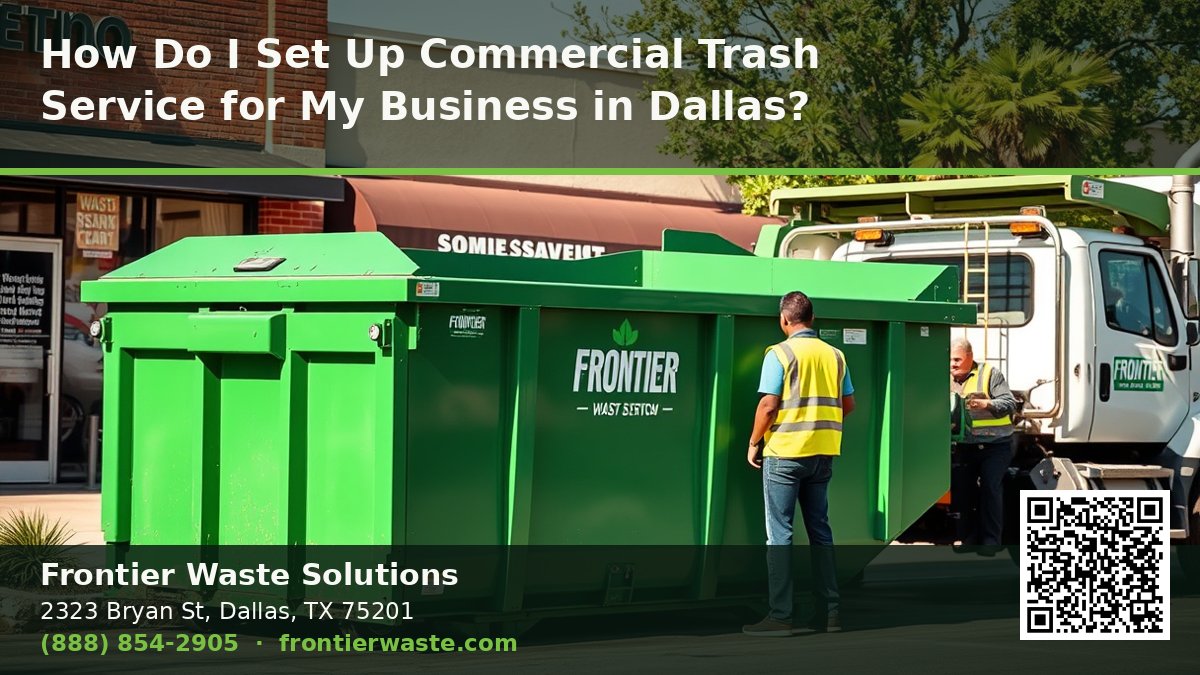
To set up commercial trash service in Dallas, you arrange collection through a private waste hauler — not the city’s residential program, which doesn’t provide dumpster service to businesses. You’ll pick a container type and size, choose how often it gets emptied, confirm placement and access for the collection truck, and sign a service agreement that sets your monthly rate. Most providers can have a dumpster delivered and on a schedule within a few business days. Have your business address, the type and rough volume of waste you produce, and your preferred start date ready when you call.
What counts as commercial trash?
Commercial trash is simply waste produced by a business or commercial activity rather than a household. It’s the byproduct of offices, restaurants, retail stores, warehouses, apartment communities, and similar operations — think cardboard from shipments, food scraps from a kitchen, packaging, paper, and general day-to-day refuse.
The key difference from household trash isn’t only what’s in it but how much of it there is and how predictably it builds up. A busy restaurant can fill a dumpster several times a week, while an office might barely fill one. That volume is what drives the kind of container and schedule you’ll need — and it’s why most businesses need a proper commercial dumpster service rather than a residential-style cart.
What’s the difference between commercial and residential trash service?
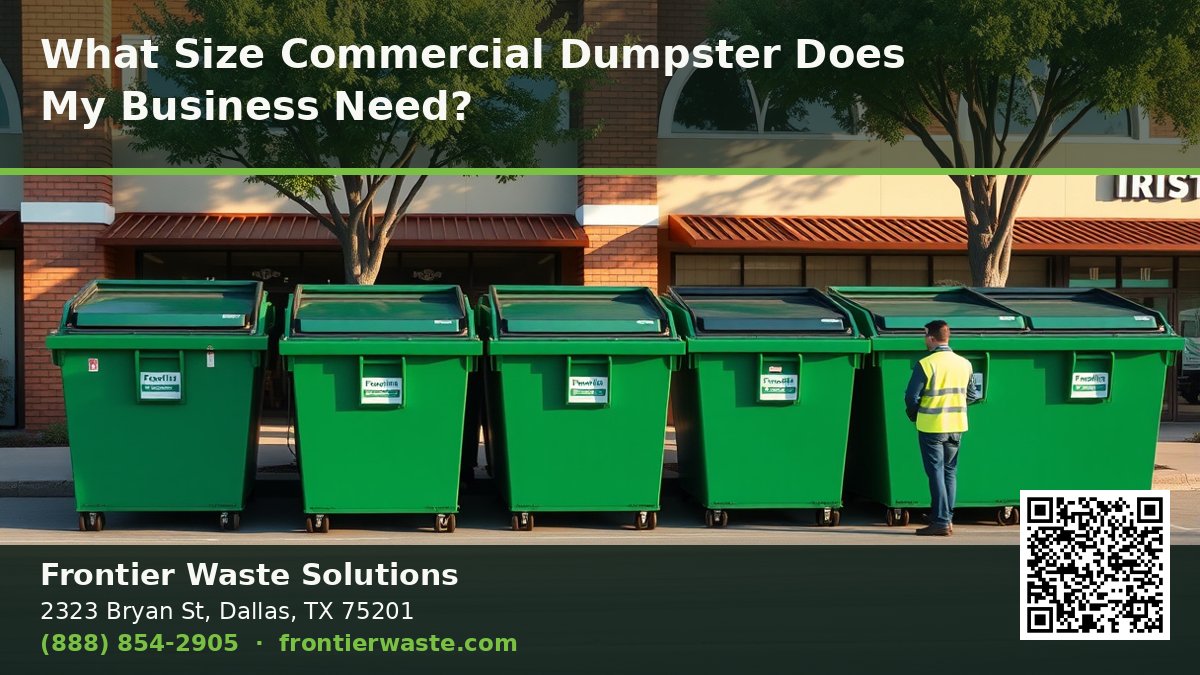
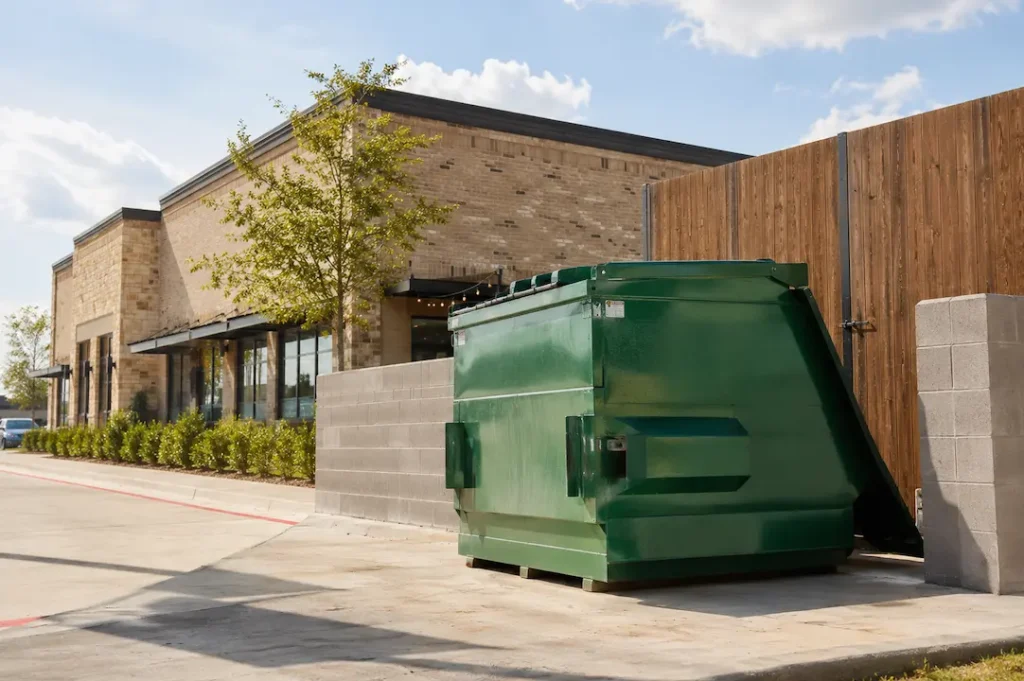
Residential service is standardized and simple: a city or hauler gives you a roll cart, picks it up on a set day, and bills a flat, predictable amount. Commercial service is built around your business. Instead of a cart, you typically get a front-load dumpster — commonly 2, 4, 6, or 8 cubic yards — sized to your volume, on a pickup frequency you choose. That can range from once a week to several times a week, or daily for high-volume operations.
Commercial agreements also tend to run as ongoing service contracts rather than casual month-to-month arrangements, and the rate reflects your container size and how often it’s emptied. In short: residential is one-size-fits-most; commercial is configured to match your waste. If you’re a smaller operation, our trash service for small businesses and offices covers the most common setups for low-to-moderate volume.
Does the City of Dallas pick up commercial trash?
This is the step that surprises the most business owners. The City of Dallas Sanitation Services department provides commercial collection using residential-size garbage and recycling roll carts only — it does not provide dumpster or roll-off container service to businesses. The city itself notes that this makes cart service an impractical option for most commercial establishments, and that Dallas businesses requiring a dumpster should elect service from a private solid waste hauler authorized to operate in the city.
The takeaway for a new Dallas business is simple: don’t assume the city dumpster will show up. Line up a commercial provider as part of your opening checklist, the same way you’d arrange utilities or insurance. Most haulers can confirm service and get a container delivered within a few business days of signing the agreement.
How do I set up commercial trash service for my business?
The process is more straightforward than it sounds. Here’s the typical path from first call to first pickup.
- Estimate your volume. Roughly how much trash do you produce in a week, and is any of it recyclable cardboard or paper? This sets your container size and pickup frequency.
- Pick a container and schedule. A front-load dumpster on a weekly or multi-times-a-week pickup covers most businesses. High-volume kitchens and busy retail may need more frequent service.
- Confirm placement and access. The dumpster needs a spot the collection truck can reach — an enclosure, a back lot, or a designated pad with clear overhead and side clearance.
- Review and sign a service agreement. This locks in your container, schedule, and monthly rate.
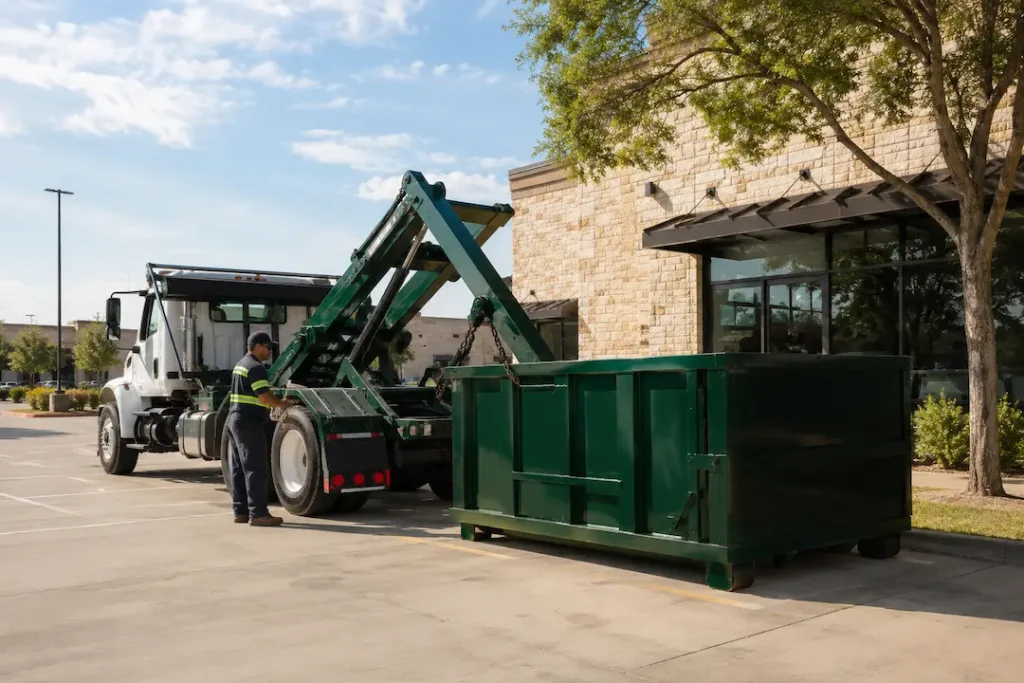
- Schedule delivery and your first pickup. Once the agreement is in place, the dumpster is dropped and your regular collection day begins.
From the first call, getting a dumpster delivered and on a schedule usually takes only a few business days. Calling ahead of your opening date avoids any gap in service on day one.
What information do I need to start service?
To get a quote and start service quickly, have these handy when you call:
- Your business name and service address
- The type of business and what kind of waste you generate
- A rough estimate of weekly volume — how many bags or boxes you fill
- Whether you also want recycling collection
- Where the dumpster can be placed on your property
- Your preferred start date
If you’re moving into a shared building or strip center, it also helps to know whether trash is your responsibility or the landlord’s before you call. More on that below.
Do I need a contract for commercial trash service?
Most ongoing commercial trash service is set up as a service agreement rather than a casual month-to-month arrangement. The agreement spells out your container size, pickup frequency, and rate — which keeps your billing predictable and protects both sides. Terms vary by provider and by the level of service you need, so it’s worth asking up front about the length of the agreement, what happens if your volume changes, and how to adjust your schedule as your business grows.
If you only have a short-term need — a renovation, a build-out, or a one-time cleanout — a roll-off dumpster rental is usually the better fit than a long-term commercial agreement. Roll-offs are built for one-time bursts of debris and don’t require an ongoing contract.
Who is responsible for the dumpster — me or my landlord?
It depends on your lease and property type. In multi-tenant buildings and many strip centers, the property owner often arranges a shared dumpster and folds the cost into your lease or common-area charges. In standalone buildings, the business typically sets up and pays for its own service.
Before you call a hauler, check your lease and ask the landlord whether waste service is already provided. If it is, confirm that the shared container and pickup frequency are actually enough for your operation — an undersized shared dumpster is a common source of overflow complaints, and you may need your own service if your volume is higher than your neighbors’. If you’re running a kitchen or bar, a shared small-business dumpster almost certainly won’t cut it; see our dedicated guide for trash pickup for restaurants and bars.
Front-load dumpster or roll-off — which do I need?
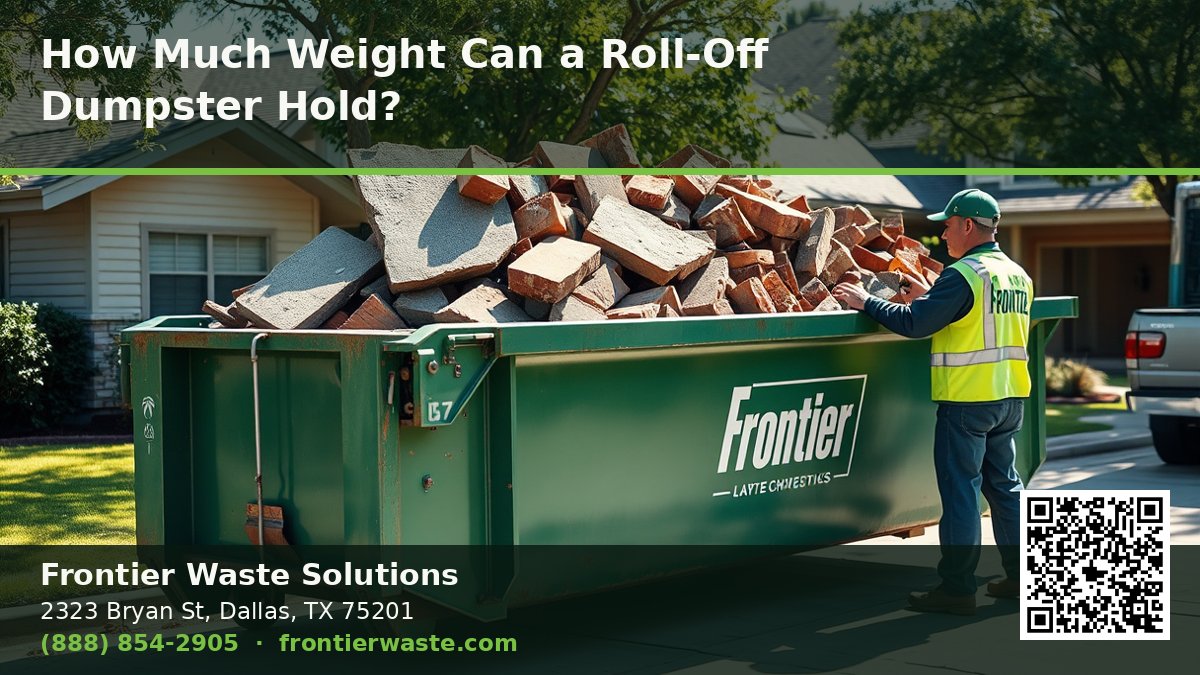
For ongoing, everyday business waste, a front-load dumpster on a recurring schedule is almost always the right tool. It sits at your location, gets emptied on your collection days, and is sized for steady week-to-week volume. A roll-off — the large open-top container you’ve seen on construction sites — is built for one-time bursts of heavy or bulky debris, like a remodel, a tenant build-out, or a big cleanout.
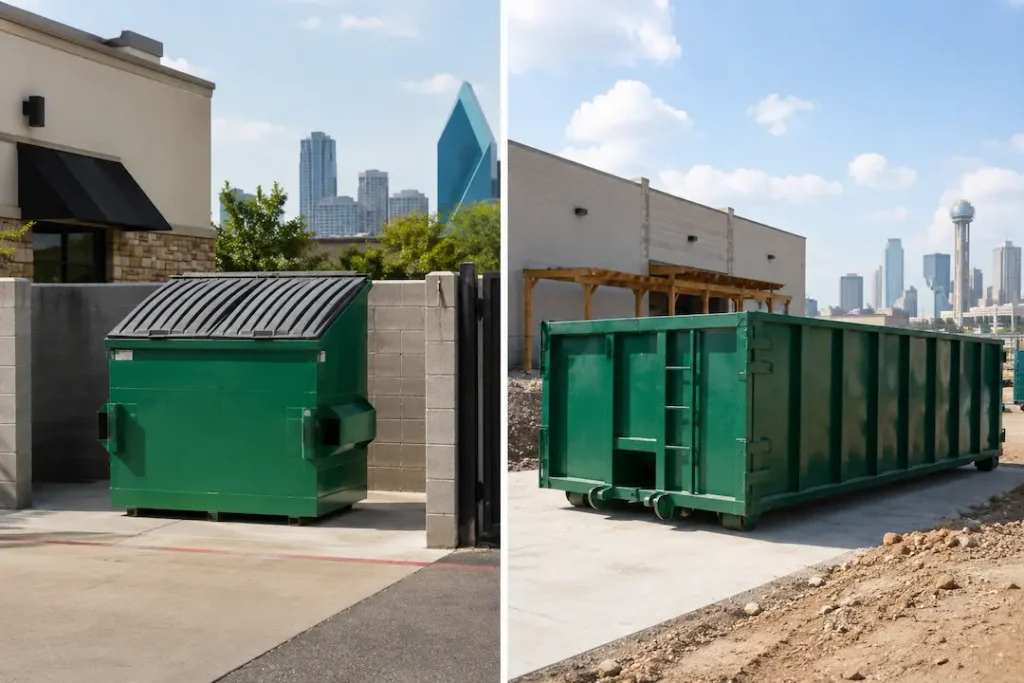
Many businesses use both at different times: a front-load dumpster for daily operations, and a roll-off when a project generates more debris than the regular container can handle. The clearest way to decide is to ask what the waste is for — steady weekly operations call for a front-load on a service agreement, and a one-time project or cleanout calls for a roll-off rental. If you’re still figuring out which container size fits your day-to-day volume, our guide to what size dumpster your business needs walks through the decision by business type.
Frequently Asked Questions
How long does it take to get commercial trash service started in Dallas?
Once you’ve chosen a container and signed the service agreement, delivery and your first scheduled pickup can usually be arranged within a few business days. Calling ahead of your opening date avoids any gap in service.
Can I get recycling along with my trash service?
Yes. Many Dallas businesses set up commercial recycling — especially for cardboard and paper — alongside their trash pickup. Mention it when you request a quote so the right containers and schedule are included from the start.
Can I change my pickup frequency later?
Usually, yes. If your volume grows or slows with the seasons, you can typically adjust your container size or how often it’s emptied. Ask your provider how changes are handled before you sign so you know what flexibility you have.
Do I need a permit for a commercial dumpster in Dallas?
It depends on where the dumpster sits. A container on private property — a back lot, an enclosure, or a private parking pad — does not require a permit. If the container needs to go on a public street, sidewalk, or right-of-way, a right-of-way permit is required. Our guide to dumpster permits in Texas covers the process, what Frontier handles on your behalf, and how to apply if needed.
What size dumpster does my business need?
It comes down to your weekly volume. Front-load dumpsters commonly range from 2 to 8 cubic yards — a small office may only need the smallest size on a weekly pickup, while a restaurant often needs a larger container emptied multiple times a week. When in doubt, size up slightly: an overflow pickup almost always costs more than a little extra capacity. For a full breakdown by business type, see our guide to what size dumpster your business needs.
Get Set Up With Frontier Waste Solutions
Opening or relocating a business in Dallas? We’ll help you choose the right container and schedule and get your commercial trash service started without the guesswork. Tell us about your location and what you throw away, and we’ll handle the rest.
Frontier Waste Solutions
2323 Bryan St, Dallas, TX 75201
Phone: (888) 854-2905